
The Story
Why it exists.
The beginning
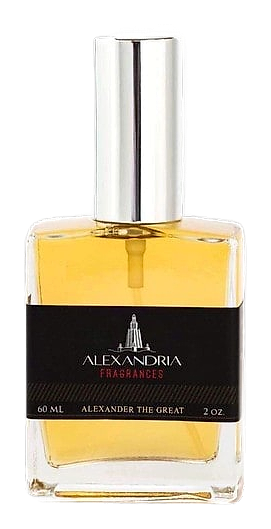
Alexandria Fragrances built Alexander the Great around a single idea: power, but with restraint. Named for the conqueror who built an empire spanning three continents, the fragrance doesn't try to be loud. It tries to be right. Perfumer Hany Hafez structured this around contrast, spice against softness, green against sweet, wood against skin. The result reads like a confident handshake, not a speech.
The pyramid stacks a green-apple brightness against an oud-sandalwood foundation. That's unusual. Oud can swallow a composition whole, but here it shares space with lavender, vanilla, and rose. The trick is in the proportions: the heart notes (cedar, rose, lily of the valley) act as a bridge, letting the warmth arrive without announcement. Powdery florals against oriental woods shouldn't work this cleanly. They do.
The evolution
The opening arrives with authority, rosewood and cinnamon hit first, green apple threading through the spice. The lavender announces itself within minutes, but it's not the sharp herbaceous kind. It's softened, almost creamy. Cedar takes over the heart alongside a rose that reads more woody than dewy, with lily of the valley adding a quiet powdery note that keeps everything grounded. By hour three, sandalwood and vanilla dominate, the oud emerges as a warmth rather than a punch, settling into the skin. Musk and amber round out the base, and this is where it earns those 8-10 hours of longevity. On fabric, it lingers into the next day.
Cultural impact
Alexander the Great sits in a crowded category, oriental-woody fragrances with oud and spice are everywhere. What separates it is restraint. The sillage is strong but not room-filling, the longevity exceptional but not aggressive. It's the fragrance for someone who's past the phase of wearing scent to be noticed and has moved into wearing it because it fits.