The Story
Why it exists.
The beginning
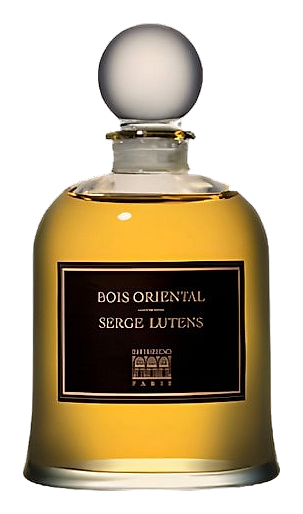
In 1992, Christopher Sheldrake translated Serge Lutens' most audacious brief into a Flacon de table. Lutens had written the manifesto himself: cedar as God's creation, enhanced with the spices of a sun rising in the East. The oriental wood as a philosophical statement. The notes list beeswax, honey, cedar, and spice, materials that shouldn't cohere, that want to compete. Sheldrake made them negotiate instead of argue. The result: a fragrance that reads as one impression despite containing everything. Warmth with teeth. Feminine and leathery, the official copy admits it plainly. Bois Oriental has been sitting in its black-lacquered box since 1992, waiting for someone who understands what a compliment cedar deserves.
The real alchemy is in how the spices behave. Cardamom and cinnamon don't arrive shouting, they rise slowly, integrated into the honey rather than fighting it. The beeswax is the structural surprise: waxy materials often feel industrial, but here beeswax gives weight without heaviness, like the surface of warm honey cooling in a jar. Cedar anchors everything, but cedar as a container rather than a statement. The oriental classification fits loosely. This lacks the vanilla or incense typical of the genre. Instead, warmth comes from honey and beeswax, sensuality from musk and the amber underneath.
The evolution
The opening announces cedar and spice with quiet authority. Within thirty minutes the honey takes over, sweet and golden, while beeswax adds body. The spices, cardamom, perhaps cinnamon, don't shout. They nest inside the sweetness. The amber accumulates beneath, warming everything without announcement. Around the second hour, something shifts. The sweetness recedes slightly. The cedar steps forward again, but now it's darker, taking on an animalic quality that the opening didn't preview. The musk arrives last, close and warm. What remains after eight hours on skin: cedar, musk, and a faint honey warmth that clings like a secret. On fabric, this fragrance outlives everything else in the wardrobe.
Cultural impact
Bois Oriental occupies an unusual position in the Serge Lutens catalogue. It's warm without being cozy, animalic without being aggressive, oriental without conforming to type. For those who find typical orientals too heavy or too sweet, this offers an alternative: warmth built from beeswax and honey rather than vanilla and incense. The fragrance has accumulated steady admirers over three decades, not through bold marketing but through quiet persistence. It doesn't try to convert anyone. Those who love it tend to love it deeply.