The Story
Why it exists.
The beginning
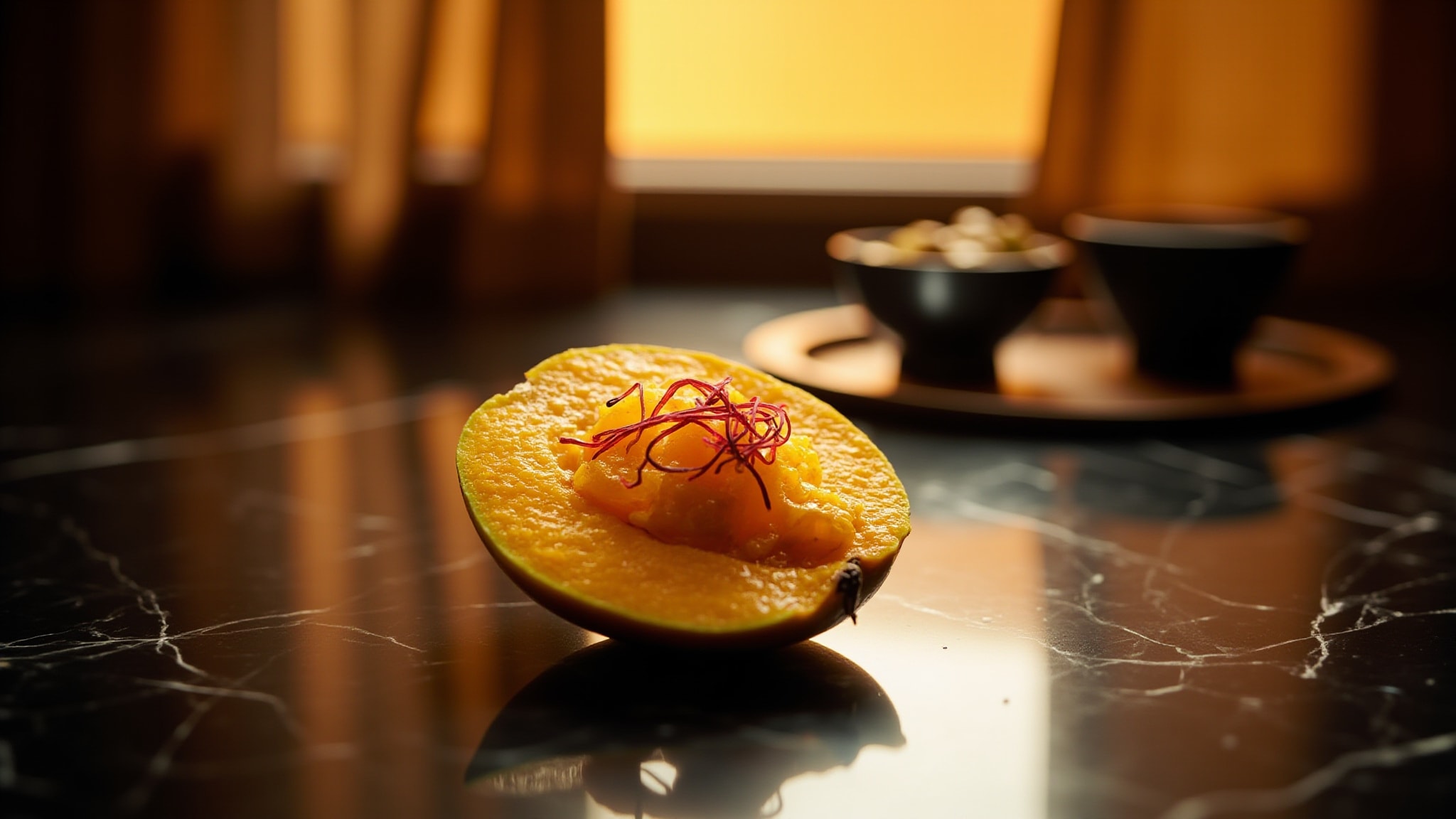
This fragrance exists outside the usual vocabulary of oriental perfumery, even as it draws from its deepest roots. Mango and saffron form the composition's unexpected axis, creating something that feels both familiar and foreign. The mango arrives sweet and almost candied, but saffron arrives fast enough to prevent it from reading as anything lightweight. What emerges is a scent that feels like it arrived from somewhere specific, even if you cannot name the coordinates. There is a tension here between the tropical brightness and the deeper, more austere character that gives the fragrance its distinctive personality.
The real tension lives in the combination of mango and saffron. Saffron carries a bitter, almost medicinal edge that should cut through tropical sweetness, instead it amplifies it, creating an impression that sits between jam and heat. The black tea in the heart adds a smoky, slightly astringent counterweight that adds complexity without overwhelming the brighter notes. Cypriol, meanwhile, is the quiet decision: a root material that smells of smoke and wet earth, grounding the sweetness before it ever gets a chance to float away.
The evolution
The opening hits immediately, mango dominates, sweet and almost candied, but the saffron arrives fast enough to prevent it from reading as anything lightweight. Pink pepper adds a quick brightness before the florals move in: Turkish rose and peony lifting the top without softening it. The heart develops as black tea introduces a smoky, slightly bitter nuance that surprises, this is not a linear sweet fragrance. The amber and praline give it warmth, but the iris adds powdery sophistication that keeps everything from becoming too heavy. As the composition settles, the base begins its long transition. Oud emerges slowly, Cypriol anchoring the drydown into something resinous and deep. Musk and tonka bean round the edges, but the oud is the telling material here, it lingers on skin for hours. On fabric the next day, cedar and patchouli hold the last traces of the scent.
Cultural impact
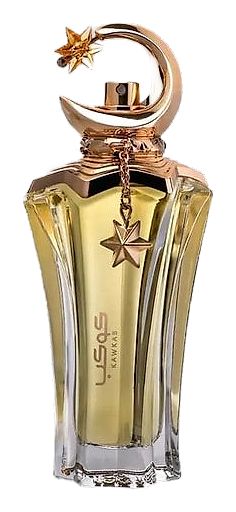
Kawkab occupies an interesting position in Ahmed Al Maghribi's catalog, the house reaching toward something more tropical and unexpected while remaining firmly rooted in oriental tradition. The mango note will divide opinion: for some it reads as playful and modern, for others it complicates what should be a serious oud fragrance. That tension is the point. Kawkab wears its fruit without apology, finding a way to make the tropical element feel native rather than grafted onto something else.