The Story
Why it exists.
The beginning
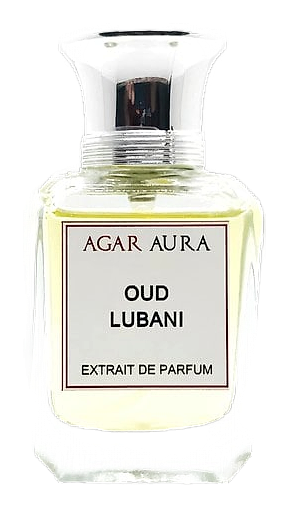
Oud Lubani arrived in 2020, composed by Taha Syed, the perfumer behind Agar Aura. The brand's relationship with agarwood runs deep. That background shaped what Oud Lubani was meant to be. The name points somewhere specific. "Lubani" carries frankincense connotations in the Arabic tradition, and the composition is built around that pairing: oud stacked against Omani frankincense. The aim appears to be the most accurate translation possible of burning a frankincense tear on a slice of agarwood. Not a perfume inspired by the ritual, but the ritual itself rendered in olfactive form. What separates this from the crowded oud shelf is the directness of intent.
What makes this composition interesting is its refusal to dilute. The formula trusts its materials completely, presenting agarwood as agarwood rather than as a suggestion of agarwood filtered through more crowd-pleasing notes. The accords tell the same story: woody, smoky, resinous, animalic, spicy. Each descriptor carries weight in oud vocabulary, pointing to the deep, dense, sometimes challenging facets that distinguish genuine agarwood from lighter interpretations.
The evolution
The opening is frankincense leading, bright before it catches heat. Within ten minutes the agarwood underneath starts pushing up, smoky and dense. The two materials braid together rather than one fading into the other. By the second hour, you're inside the oud fully. The wood delivers that specific funk, barnyard-adjacent, slightly fecal, deeply animalic, the quality that makes real agarwood worth its price. The frankincense doesn't disappear, it just moves underneath, a resinous hum supporting everything above. The drydown is where patience pays off. The sharp resin mellows into something warmer and more skin-like as the hours pass. The oud settles into a woody softness that still carries its smoky backbone, and the frankincense thins to a faint sweetness that lingers at the edges.
Cultural impact
Oud Lubani occupies a specific position in contemporary oud discourse. It's a composition built around two primary materials, oud and frankincense, with no intermediary notes to soften the encounter. For wearers who've moved past introductory oud fragrances and want something that engages directly with the material, this release offers exactly that engagement. The fragrance has built a following among agarwood enthusiasts who appreciate its directness. Community ratings place it solidly in the appreciated range, with above-average marks for longevity and sillage that suggest the composition delivers on its promise of presence without excess.
The House
Agar AuraAgar Aura is a Malaysian fragrance house and artisan oud distiller founded by perfumer Taha Syed. The brand centers on oud as its primary creative medium, treating oud-centric perfumery as an art form rather than a commercial category. The collection spans thirty perfumes, with earliest documented releases dating to 2012. Fragrance names draw from oud industry traditions and specific geographic regions associated with agarwood production, including Burmese and Malaysian locations. The house operates across two disciplines: crafting pure oud oils through in-house distillation and composing finished perfumes and extraits. Notable releases include Al-Jazzab (2022), described as a rose-heavy extrait intended to push beyond established standards, Myitkyina 4K (2021), named for a Burmese city in Shan State, and the more recent Al-Mendoos (2024). The brand maintains a deliberately understated presence, prioritizing material quality and distillation craft over visual branding or marketing narratives.
The Creator
Taha SyedTaha operates as both distiller and perfumer, a rare combination that gives him unusual control over his materials. Oud and agarwood form the foundation of his aesthetic, yet he extends beyond them into broader compositions.