
The Story
Why it exists.
The beginning
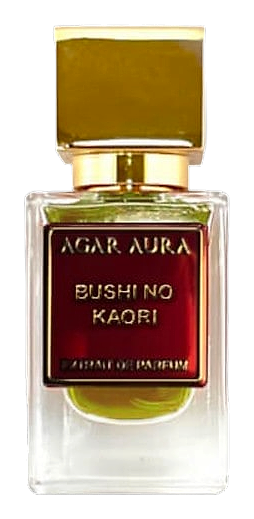
Before a Samurai walked into battle, he burned agarwood. Bushi No Kaori recreates that pre-dawn ritual through two wild oud oils, Vietnamese and Cambodian, selected for their distinct characters within the Rikkoku-Gomi tradition. Perfumer Taha Syed built the composition around this classical Japanese incense classification system, which mapped specific agarwood genres to specific temperaments. The Vietnamese oud carries the bitter and the hot, what the tradition calls nigai and karai. The Cambodian oud brings its own bitterness alongside amai, a quieter sweetness. The bitter genre, nigai, belonged to warriors. This is that genre, distilled.
The choice of two wild oud oils is deliberate, not decorative. Vietnamese oud brings the bitter and the hot, the karai burn that mirrors fire on steel. Cambodian oud counters with amai, a quieter sweetness that softens without taming, its bitterness a different shade from the Vietnamese. The two oils speak in distinct registers, each carrying its own nigai note. The aged clove oil on top references another Samurai tradition: the highest-grade clove oil was used to clean ancestral swords, and their descendants still follow the practice.
The evolution
The first minutes belong to the clove, bright and almost medicinal, sharp enough to cut through whatever you applied it over. The oud begins to assert itself gradually, and the clove recedes into something warmer, almost spiced, losing its initial sting while never fully disappearing. The bitterness deepens as the composition develops, the smoky wood notes come forward, and the whole thing turns dense and dark, the oud settling into its full register. The sweetness from the Cambodian oil never dominates, but it holds the composition together, preventing the bitterness from collapsing into pure austerity. On skin the drydown is long, the oud softening but never disappearing, the clove warmth fading to a distant hum. What remains is a quiet, woody bitterness, faint clove warmth, and the impression of smoke that happened somewhere else.
Cultural impact
Bushi No Kaori sits at the intersection of oud connoisseurship and historical reenactment. The Samurai framing grounds it in the Rikkoku-Gomi tradition, giving the composition a specific cultural anchor rather than a generalized Japanese aesthetic. The wild Vietnamese-Cambodian blend appeals to those who distinguish between regional oud profiles, since the two oils carry distinct terroir signatures within the broader agarwood family. The clove reference adds another layer of historical specificity, tying the fragrance to the maintenance rituals of ancestral swords rather than to incense burning alone.