
The Story
Why it exists.
The beginning
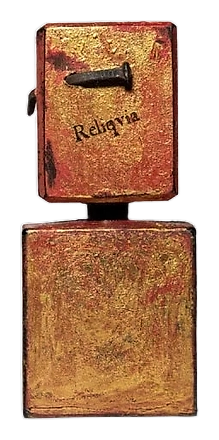
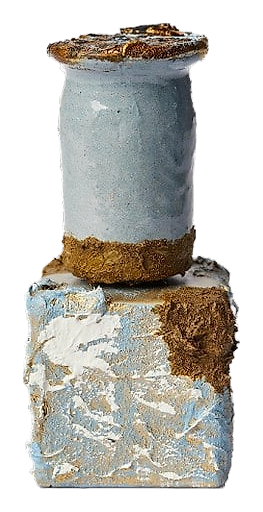
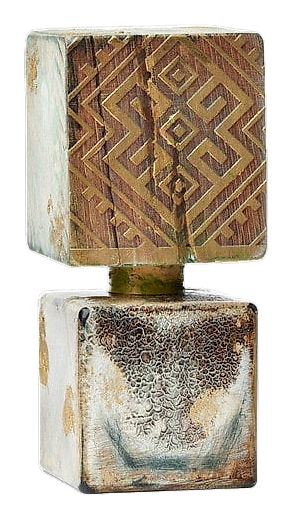
Saints Tears was born from a childhood memory made permanent. The founder of Adi Ale Van grew up near an old Romanian village church, where the atmosphere of the space itself became the inspiration for the fragrance. The scent translates that atmosphere: not a romanticized version of church incense, but the real thing. Turpentine-sharp elemi opens with a clarity that lifts the whole composition away from simple incense territory. Cedar and oakmoss carry the forest that surrounds the village, grounding the fragrance in the landscape of the place. Each bottle arrives hand-painted, with patterns that evoke the texture of the old walls. The beech wood cap bears an engraved pattern drawn from folk art traditions of Oltenia. This is memory made wearable.
What makes Saints Tears distinctive isn't just the inspiration. It's the way the materials behave. Elemi oil and turpentine oil arrive first, a green, almost biting clarity that lifts the whole composition away from simple incense territory. The smoke that follows isn't heavy or cloying. It lingers with purpose, holding its own without overwhelming the blend. In the heart, wood wax and labdanum absolute create something molten, adding depth to the overall structure. Myrrh and labdanum move together as a warm current, each enhancing the other.
The evolution
The opening arrives with elemi and turpentine oil, that green-bright sharpness, almost medicinal before the smoke arrives. The sharpness doesn't disappear. It softens into something warmer, more diffuse. This is the incense of a space that has absorbed smoke for generations, not a single burning ember. By the heart phase, wood wax and labdanum absolute move with the myrrh into a single resinous current. The sillage becomes noticeable, present in a way that holds its own. The drydown settles in as the composition evolves. Cedar and oakmoss settle close to skin. The smoke never fully disappears. It becomes part of the wood, part of the earth underneath. The fragrance remains intimate and close, grounded by the wood notes throughout its development.
Cultural impact
Saints Tears attracts those who seek fragrance as handmade product rather than commercial release. The hand-painted bottles and artisan methodology appeal to those who value the handcrafted nature of the work. In a market with many niche offerings, this fragrance holds a distinct position for those who appreciate objects made by hand and with intention.