
The Story
Why it exists.
The beginning
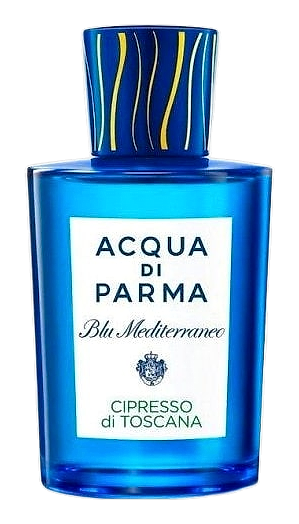
Bertrand Duchaufour composed Cipresso di Toscana in 1999 as part of Acqua di Parma's Blu Mediterraneo collection, a line devoted to the scents of the Italian landscape. The fragrance takes its name from the cipresso, the cypress tree that punctuates the Tuscan skyline like dark green calligraphy against golden afternoon light. These are not merely decorative trees. In Tuscany, they mark estate gates, line cemetery paths, shape the wind off the hillside. The land itself smells of them. Duchaufour wanted to capture that.
What makes Cipresso di Toscana stand apart is its structure. Where most Mediterranean fragrances reach for citrus or sea salt, this one builds on an aromatic fougère, lavender and clary sage doing the heavy lifting rather than hovering in a supporting role. The star anise in the top notes adds an unexpected flicker of something sharper, almost medicinal, before the conifer base of cypress, balsam fir, and pine needles anchors the whole composition in evergreen realism. It's an unapologetic fougère with a unique star anise accent. That directness is the point.
The evolution
The opening announces itself immediately, star anise's sharp, slightly metallic punch hits first, followed quickly by elemi's clean, almost turpentine-like resinousness. Orange sits underneath, barely perceptible but adding warmth. Within ten minutes, the heart takes over: Provençal lavender dominates, true to its name, with clary sage adding a slightly medicinal clarity. The transition feels like walking deeper into a forest rather than leaving it behind. By the second hour, the conifers arrive and settle in for the long haul. Cypress, balsam fir, and pine needles create a woody-green base that never fully releases. Four to six hours in, what lingers is the cypress, that resinous, pencil-shaving drydown that stays close to the skin. It doesn't project far at this point, but it doesn't need to. The wearer knows it's there.
Cultural impact
Cipresso di Toscana occupies a specific corner of the aromatic fougère category, one defined by its evergreen realism rather than the soap-and-bergamot barbershop interpretation. Wearers who connect with it tend to describe it as the fragrance of someone who doesn't need to announce themselves. It evokes a landscape rather than a mood, and that specificity is what keeps people returning to it twenty-plus years after its debut.