
The Story
Why it exists.
The beginning
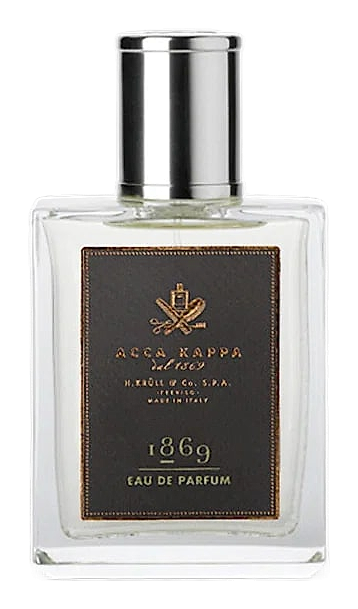
Acca Kappa named this fragrance for 1869, the year the house itself began, tying a modern composition to a longstanding Italian grooming tradition. Launched in 2005, the brand has called it their most classic men's fragrance, built around a leather accord that anchors the entire structure. The choice feels deliberate: a scent that carries the weight of heritage without performing it, an eau de parfum designed for daily wear. Acca Kappa drew on its longstanding relationship with fine materials, bringing the same standards to composition that have defined its other work. The result is a scent that feels inherited rather than launched, as though it had always existed within the house and simply waited its turn.
What makes 1869 work is the friction between its top and heart. Cardamom and geranium bring a brisk, almost bracing energy, green and sharp, before the composition pivots hard into violet leaf, iris, and leather. That contrast is the whole architecture. The violet leaf does unusual work here: instead of reading sweet or powdery, it pulls the leather toward something aqueous and green, almost mineral. Iris grounds it, adding a dry, suede-like depth that keeps the leather from tipping into costume.
The evolution
The first thirty minutes are all cardamom, bright and green, with geranium humming underneath like a radiator in an empty room. Then the violet leaf arrives, and something shifts. The composition cools, takes on a damp, almost metallic edge, and the leather emerges from underneath. Not new leather. Not fashion. Leather that's been folded in a drawer for years, then pulled out, still holding its shape. Iris flattens the sweetness, keeps everything taut. Around the three-hour mark the vanilla surfaces, quiet and warm, and the cardamom retreats to a polite hum in the background. By hour five you're left with a soft amber-leather drydown, close to the skin, the kind of scent that lingers on a scarf the next morning. It doesn't project much in those final hours, but what's left is remarkably clean, almost soapy in the best sense.
Cultural impact
Wearers gravitate to 1869 for its quiet authority, the kind of leather-spiced composition that reads as personal rather than performed. It sits comfortably alongside established masculine references like Dior Fahrenheit in the spicy-leather category, listed among similar fragrances on community databases. The kind of scent someone wears when they want to be noticed without explanation. It has earned a following among those who prefer their fragrances to suggest rather than announce, finding a place in collections alongside heavier orientals and sharper fougères.