Camphor Leaf
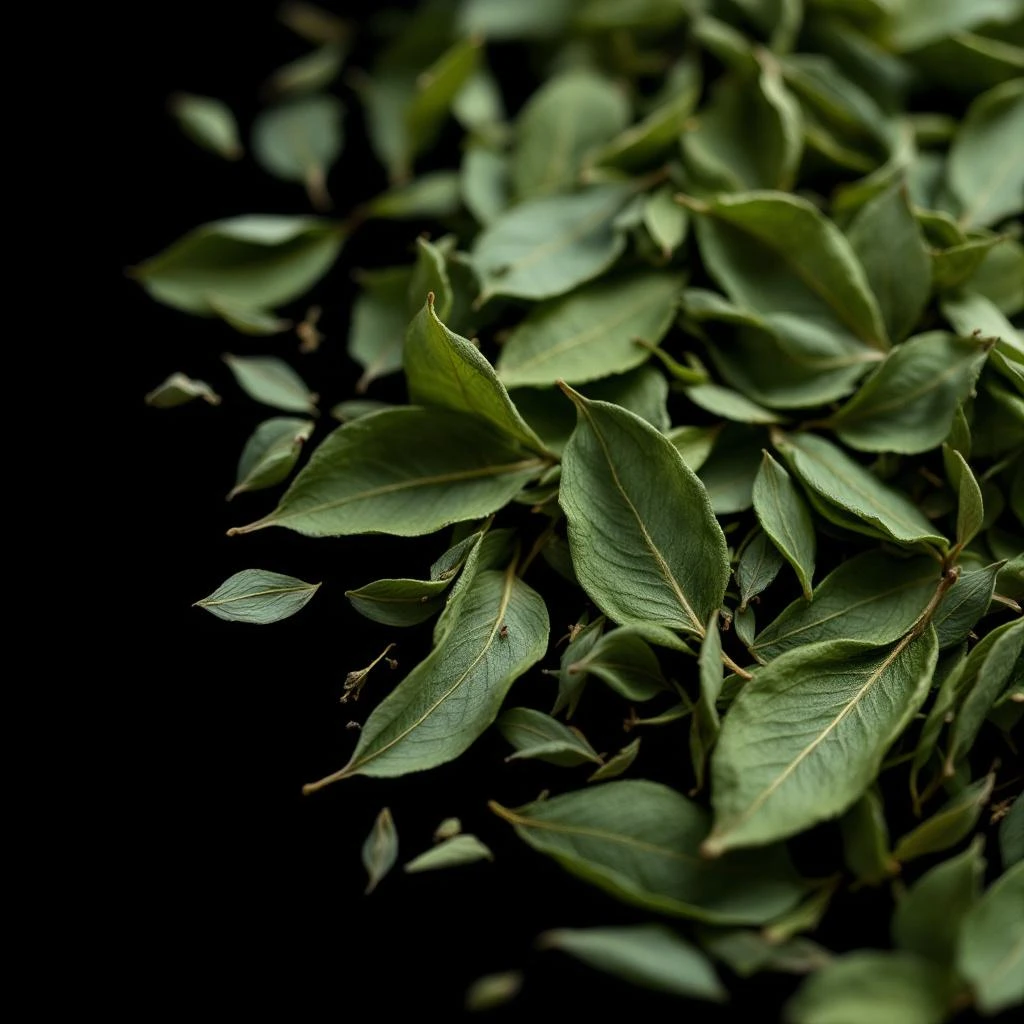
Camphor leaf delivers a piercing, mentholated brightness that cuts through heavier compositions. Distilled from Cinnamomum camphora foliage, it brings an almost medicinal coolness, evoking eucalyptus forests and freshly crushed herbs.

Character
How it smells
A sharp, cooling breath from ancient forests
Ibn Māsawayh ranked camphor among the five most important aromatic substances in medieval Arab perfumery, prized for its rarity and clarity.






Origin
China
Camphor has a documented history spanning more than a millennium across Asia, the Middle East, and Europe. The earliest known extraction methods, recorded in ninth-century texts, describe distilling the leaves and wood of Cinnamomum camphora to obtain the prized crystalline substance. In medieval Arab perfumery, camphor occupied an elite position: the physician Ibn Māsawayh named it one of the five most significant aromatics, valued for its cooling scent and its ability to fix other, more volatile ingredients.
By the medieval period, camphor traveled the Silk Road and maritime trade routes, reaching European apothecaries who imported it for medicinal and ceremonial purposes. During the Black Death, camphor was burned as a fumigant across plague-stricken cities, a practice rooted in the miasma theory of disease. It also appeared in embalming fluids and temple rituals from India to Japan.
Before the First World War, Taiwan dominated the international camphor trade, exporting massive quantities from old-growth forests. The Japanese colonial administration's intensive harvesting eventually exhausted these stands, and synthetic production from turpentine took over. Camphor leaf oil, however, retained its place in perfumery as a source of bright, cooling top notes.
Wears it best
Fragrances featuring Camphor Leaf
Brands
Brands known for Camphor Leaf
Good to know
Questions, answered
The essentials on Camphor Leaf in perfumery: how it smells, where it comes from, and how it behaves on skin.
What does camphor leaf smell like?
Camphor leaf oil has a sharp, penetrating, mentholated scent with cooling and slightly medicinal qualities. It recalls crushed eucalyptus leaves and fresh herbs, often used in perfumery to add a crisp, clean opening to compositions.
Is camphor leaf oil natural or synthetic?
Both exist. Natural camphor leaf oil comes from steam-distilling the foliage of Cinnamomum camphora trees. Synthetic camphor, produced from turpentine-derived alpha-pinene, became dominant after the First World War due to shortages of natural supply.
Where does camphor leaf come from?
The camphor tree, Cinnamomum camphora, is native to East Asia, with major production centered in China, Taiwan, and Japan. Camphor basil, the parent of African blue basil, also serves as a significant Asian source.
What is camphor leaf used for in perfumery?
Perfumers use camphor leaf oil as a bright top note, lending a cooling, almost mentholated lift to fougère and aromatic compositions. Its penetrating freshness adds clarity and acts as an enhancer for herbal accords.
How is camphor leaf oil extracted?
Steam distillation is the standard method: harvested leaves are exposed to pressurized steam, which releases volatile compounds. The condensed vapor separates into essential oil and hydrosol, with camphor concentrations sometimes reaching several percent of leaf dry weight.
What is the historical significance of camphor?
Ibn Māsawayh ranked camphor among the five most important aromatics in medieval Arab perfumery. It was also burned as a fumigant during the Black Death and used in temple rituals and embalming practices across Asia and Europe.
Is camphor safe in fragrances?
Camphor is restricted in cosmetic use under IFRA guidelines due to its potential neurotoxicity at high concentrations. In standard perfumery dilutions, it is considered safe, though regulatory limits vary by region and product type.
How does camphor differ from eucalyptus in scent?
Camphor shares eucalyptus's cooling, medicinal character but carries a drier, woodier edge with more pronounced herbal sharpness. Eucalyptus tends toward sweeter, more rounded freshness, while camphor reads as more austere and penetrating.