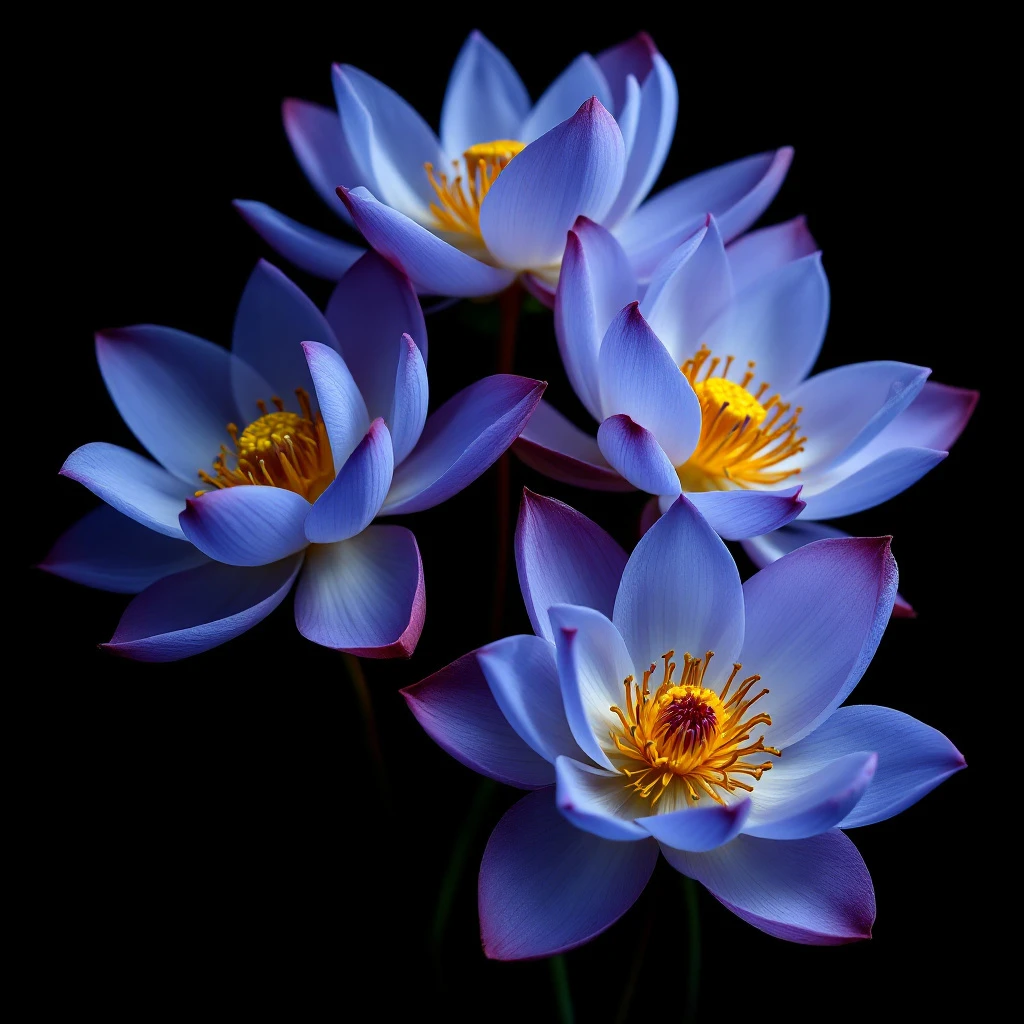
Blue Lotus Flowers
A sacred water lily from the Nile's edge, blue lotus lends perfumery a rare aquatic-floral whisper, creamy and slightly green, wrapped in 3,000 years of ritual.
Character
How it smells
The sacred bloom of the Nile
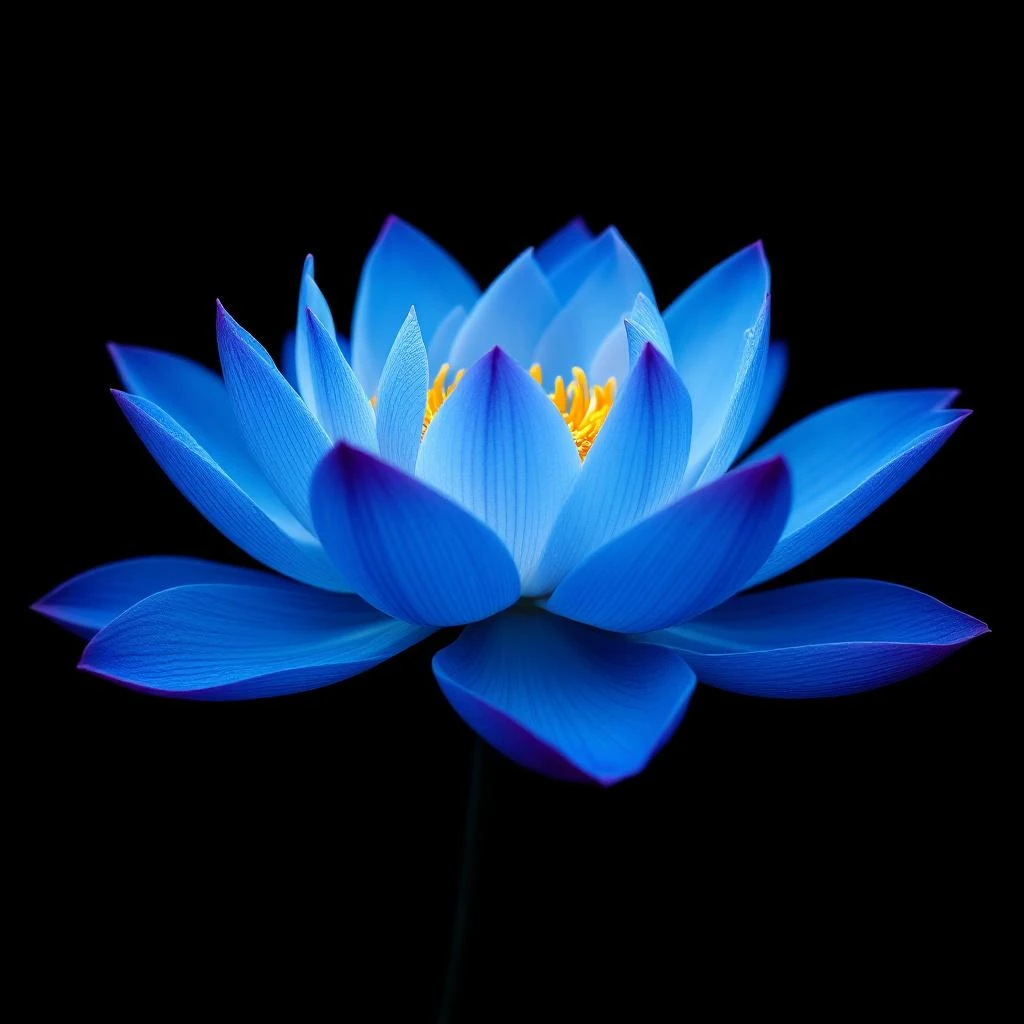
Egyptian blue lotus (Nymphaea caerulea) closes its petals at night and reopens at dawn, a sun-worshipping rhythm that inspired its association with rebirth.




Origin
Egypt
Blue lotus (Nymphaea caerulea) grew wild along the shallow margins of the Nile and across East Africa, its sky-blue petals emerging from muddy waters each morning. Ancient Egyptians elevated the flower into sacred status, painting it on tomb walls, carving it into temple columns, and weaving it into funerary garlands. It appeared in the Heb Seds, the jubilee rituals of pharaohs that celebrated renewal and eternal kingship.
Egyptian priests steeped the blooms in wine and oil, producing scented unguents likely related to the unguent jars found in Tutankhamun's tomb. The flower's symbolism spread with trade routes to India and beyond, where water lilies carried their own layered meanings in Hindu and Buddhist traditions. By the late 19th century, European botanists catalogued the species and attempted the first aromatic extractions.
Modern natural perfumery revived interest in the 20th century, drawn to its ancient prestige and unusual aquatic-floral character that few other botanicals replicate.
Wears it best
Fragrances featuring Blue Lotus Flowers
Brands
Brands known for Blue Lotus Flowers
Good to know
Questions, answered
The essentials on Blue Lotus Flowers in perfumery: how it smells, where it comes from, and how it behaves on skin.
What does blue lotus smell like in perfume?
Blue lotus smells floral, aquatic, and creamy with a soft green undertone. True Nymphaea caerulea absolute carries a subtle watery sweetness rather than a loud floral punch, which is why it often needs support from other florals to register clearly in a composition.
Is blue lotus the same as Egyptian water lily?
Yes, the species most perfumers call blue lotus is Nymphaea caerulea, a water lily native to the Nile region. It is botanically distinct from the Indian lotus (Nelumbo nucifera), which carries a different, spicier aromatic profile.
Why is genuine blue lotus oil so expensive?
Extraction requires thousands of hand-picked blooms per kilogram of absolute, and yields are consistently low. Combined with limited cultivation, these factors push authentic blue lotus absolute into the rarified price tier of floral ingredients.
How can you tell if blue lotus oil is authentic?
Lab analysis can verify authenticity; a 2023 chemical study identified specific aliphatic and aromatic marker compounds in genuine Nymphaea caerulea extracts. Adulteration rates remain high, so GC-MS testing is the only reliable confirmation method.
What perfumes use blue lotus as a key note?
Blue lotus appears in select niche and natural perfumery creations, though specific prominent examples are limited. Its modern use remains more common in private artisan blends than in large commercial fragrance houses.
Does blue lotus have psychoactive properties?
Nymphaea caerulea contains trace alkaloids including aporphine and nuciferine, compounds studied for mild sedative effects. Perfume application involves far too little of these constituents to produce any noticeable physiological effect.
What scents pair well with blue lotus?
Blue lotus layers naturally with other watery florals like lotus and water lily, plus green notes such as fig leaf and violet leaf. Resins like frankincense and soft musks add warmth without drowning out its delicate aquatic character.
Can blue lotus be made synthetically?
Some aroma chemists have attempted to reconstruct its profile using synthetic fragrance molecules, though none capture the full complexity of the absolute. Most "blue lotus" accords in commercial perfumery rely partly on synthetic stand-ins blended with or instead of the natural material.





