The Story
Why it exists.
The beginning
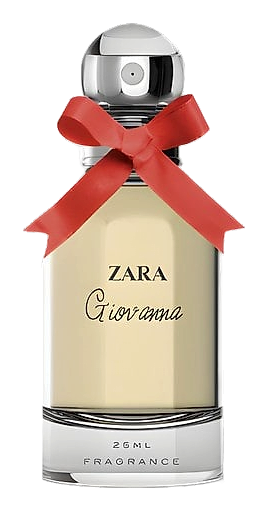
Giovanna arrived in 2011 as part of a four-piece collection from Zara, each one named for a woman of a different nationality. Maria represented Spain, Brigitte was French, Katie was English, and Giovanna was the Italian of the group. The four bottles sat side by side on the shelf like a small European roll call, a single line of EDT releases in a 25 ml format that fit neatly in a hand. As an Eau de Toilette, Giovanna leans into a floral register, the kind of composition that opens with a soft burst of petals and settles quickly into something warmer and more grounded. The heart of the fragrance brings a gentle interplay between blossom and soft skin musk, while the drydown lingers with a quiet, almost powdery warmth that reads closer to clean laundry than to anything heavy or resinous.
What makes Giovanna interesting is how deliberately small it aims. The floral heart sits at the center of a composition that doesn't try to do much else. There's no dramatic twist, no surprise base note that rewrites the opening. In a fragrance world chasing louder, longer, more complex, Giovanna commits to the gentle middle path. It's a composition that knows what it is.
The evolution
The first 15 minutes are almost weightless, a soft green-floral lift that reads fresh and clean, like stepping outside after rain. By the 30-minute mark, the floral core settles into something warmer and creamier, the kind of skin-adjacent softness that feels lived-in rather than applied. The drydown stretches into a gentle musky-floral blend that clings to fabric and hair rather than announcing itself. On most skin it runs a modest 4-6 hours before fading to a quiet trace, though some wearers report it pushing further. The next morning, the pillow carries a faint, pleasant ghost of it. Giovanna doesn't evolve dramatically. It just softens.
Cultural impact
Giovanna occupies a small but interesting corner of the Zara fragrance catalog simply by virtue of having been around since 2011. In a brand's lineup that turns over frequently, any bottle that has lasted more than a decade carries a certain weight, not because it was marketed as iconic, but because it kept finding buyers quietly enough to justify staying in production. For people who picked it up in the early years, the scent often reads as a time capsule of an earlier phase of the Zara perfume shelf, a moment when the range felt less algorithmically designed and more like a stack of distinct little characters sharing the same box.