
The Story
Why it exists.
The beginning
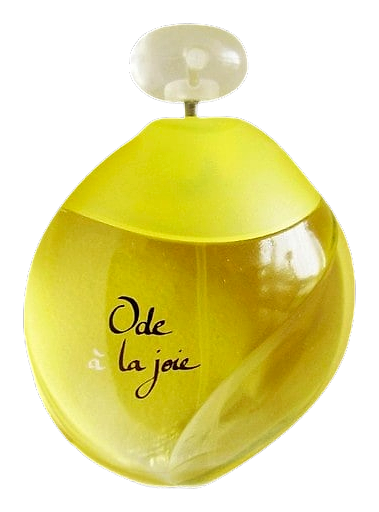
Ode a la Joie translates directly to Ode to Joy, a name borrowed from Friedrich Schiller's poem, the same one Beethoven immortalized in his Ninth composition. That reference sets the ambition: a fragrance meant to capture something celebratory, uncomplicated, genuinely happy. Yves Rocher, the Breton botanical house founded in 1959, had spent decades perfecting plant-derived skincare before turning that same philosophy toward fragrance. In 2002, Ode a la Joie arrived as an articulation of the brand's core belief, that joy doesn't need to be complicated. That nature, done well, is enough.
What makes this composition work is its refusal to overreach. The citrus top is straightforward, Bergamot, Lime, Mandarin Orange, but executed with care. The heart of Jasmine, Lily, and Peach keeps things soft and approachable without tipping into sweetness overload. The base of Virginia Cedar and Musk grounds everything in something that lingers without announcing itself. It's a daylight fragrance. Uncomplicated. That's not a criticism, it's the whole point.
The evolution
The opening hits immediately: citrus oils, sharp and clean, the Lime doing most of the work in those first fifteen minutes. Then the Mandarin Orange softens, and the Peach arrives, not a note that dominates, but one that sweetens the transition. The florals take over around the half-hour mark, Jasmine leading with a quiet creaminess that pushes the Lily and Peach into the background. You almost forget it's there until the Cedar arrives, dry and warm, pulling everything down into a base that lasts another three to four hours. The Musk never fully disappears, it threads through the whole drydown like a second skin. On fabric, it fades faster. On skin, it holds its own through an afternoon.
Cultural impact
Ode a la Joie occupies a particular niche, the affordable French fragrance that doesn't try to compete with the designer heavyweights. It arrived in 2002 during a period when citrus florals were gaining traction as daytime alternatives to the heavierorientals dominating the market. What set it apart was its restraint: not a statement fragrance, not a skin scent, but something in between. Wearers describe it as the fragrance of someone who doesn't need to announce themselves. It has maintained a quiet following among those who discovered it in the early 2000s and continue to reach for it, a testament to the kind of loyalty that only comes when a fragrance matches someone's idea of themselves.