
The Story
Why it exists.
The beginning
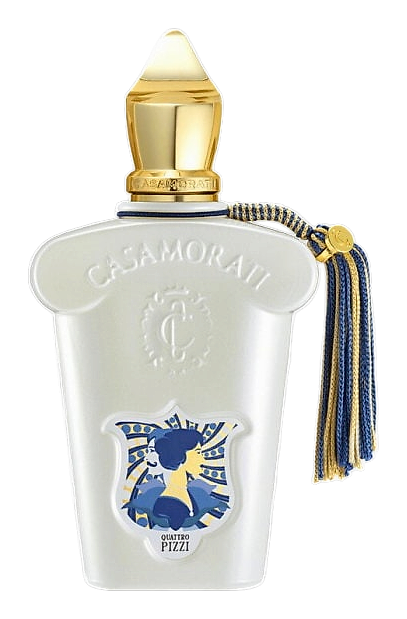
Casamorati Quattro Pizzi is a release from the Casamorati line marketed by Xerjoff. The composition reads warm, sweet, and quietly bold, more evening than morning, more silk than cotton. It's a portrait of an old-world mood: a Sicilian courtyard at dusk, lace curtains moving in the breeze, the smell of rum and tobacco drifting past white flowers. The fragrance leans into that atmosphere without leaning on period costuming or literal historical cues. Instead, it uses the language of perfume to suggest it: the way the rum note feels like aged sweetness rather than fresh alcohol, the way the tobacco carries a golden, sun-cured quality rather than anything ashtray-adjacent, the way the coconut softens the tuberose into something closer to warm skin than a white-floral statement.
What's interesting here is the note architecture. Davana and rum at the top is unusual: davana brings an herbal, almost boozy sweetness that mirrors the rum's warmth without doubling it. They work together like a chord, not a melody. The coconut in the heart is the risk: paired with tuberose and lifted by pink pepper, it becomes something closer to sun-warmed skin than sunscreen. The base of blond tobacco, tonka, and hay is where the composition gets its depth, that dry, golden grassiness that pulls the sweetness back toward something earthier.
The evolution
The opening is the loudest phase, and it doesn't apologize. Rum hits first, sweet and dark, followed almost immediately by the pink pepper and davana, which add a herbal, slightly boozy edge. The warmth settles and the tuberose steps forward, but not as a classic white floral. The coconut softens it, gives it that creamy, almost lactonic quality that makes the whole heart phase smell like warm skin in candlelight rather than a bouquet. The base starts to take over as the composition wears on. The blond tobacco arrives dry and golden, the tonka adds a soft resinous sweetness, and the hay grounds everything with that sun-dried grassiness. Eventually you're in full drydown, and the scent has narrowed to a close, intimate skin scent: tonka, hay, and the ghost of coconut. The way the fragrance evolves is part of what makes it interesting.
Cultural impact
Casamorati Quattro Pizzi arrives with a Belle Époque sensibility baked into its presentation, though the fragrance itself speaks in its own language rather than quoting historical references directly. The rum-davana opening and the coconut-tuberose heart place it within a broader conversation about warm, creamy compositions that have gained traction in niche perfumery. There's a theatrical refinement to how the scent unfolds, the kind of slow-reveal construction that rewards attention rather than demanding it. It doesn't shout for recognition, but it has enough character to hold its own in a crowded field.