The Story
Why it exists.
The beginning
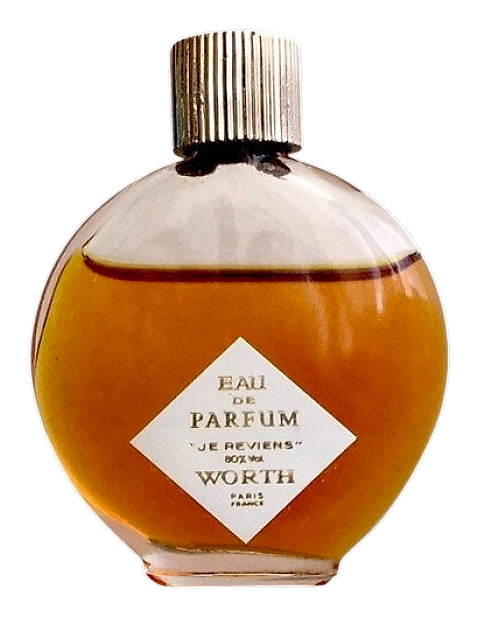
Maurice Blanchet composed Je Reviens in 1932, a year when perfumery was still rewriting its own rules. The name translates to "I come back," a phrase that reads less like a product title and more like a promise. The bottle itself was entrusted to René Lalique, whose art glass had become the standard for luxury in the era. The composition opens with a burst of aldehydes that crackles bright and almost effervescent against the skin, carrying the early tension of a fragrance that wants to be noticed. Ylang-ylang and orange blossom arrive shortly after, their sweetness given a nervous edge by that sparkling synthetic shimmer, while lemon and bergamot keep the opening buoyant and lean, refusing to let the florals collapse into syrup.
What makes Je Reviens structurally interesting is the sheer density of its floral heart. Lilac, narcissus, rose, and hyacinth share space with orris root, a combination that creates a powdery, almost metallic floral effect rare in later compositions. The aldehydes at the top amplify that effect, pushing the florals into something sharper and more sculptural. The result is a bouquet that feels sculpted rather than scattered, each bloom offering a distinct texture while the orris root pulls everything into a soft, suede-like blur.
The evolution
The opening hits fast, almost confrontational. Aldehydes crackle across the surface like light on cut glass, and the ylang-ylang and orange blossom arrive within minutes, sweet and almost tropical but held tense by that sparkling synthetic edge. The lemon and bergamot keep things buoyant for the first stretch, preventing the florals from tipping into sweetness. By the half-hour mark, the heart settles into full expression. Lilac and narcissus dominate, with the rose and hyacinth adding color and depth. The orris root brings a powdery, suede-like quality that gives the bouquet texture, wrapping around the brighter petals like a soft veil that softens their edges without dulling them. This is the phase where the fragrance feels most itself, a dense floral statement that holds its composure through the hours. The transition to the base is gradual but unmistakable.
Cultural impact
Je Reviens occupies a specific place in fragrance history as a 1932 composition that retained the aldehydic sparkle associated with the decade's luxury perfumery. Its bottle by René Lalique signaled that fragrance could be art object, not just accessory. It draws comparisons with other classical French houses of comparable era and standard, sitting comfortably alongside compositions from Guerlain and the great couture fragrance traditions of the early 20th century. The composition's insistence on structure and formality gives it a particular sensibility, one that values longevity over initial shock and finish over flash.