The Story
Why it exists.
The beginning
Tuvara arrived in 1948, when Bernadine de Tuvaché was channeling something specific: the particular kind of confidence that follows a war, when people were ready to dress up again, to smell like something that meant business. The name itself, Tuvara, echoed the house's French-inflected identity without spelling out an origin story. It simply sounded like it belonged on a dressing table. Bernadine built this one around contrast: bright aldehydes and cool herbal notes up top, incense and warm florals in the heart, a base that leaned into myrrh and oakmoss with the kind of honesty the house was known for. No hiding. No apology.
What makes the pyramid interesting is how patchouli appears twice, in the heart and again in the base, which gives the fragrance a through-line of earthy warmth that prevents the aldehydes from going fully crystalline. The inclusion of chamomile is unusual in a mainstream 1948 release; it's more commonly found in medicinal or herbal compositions, yet here it reads as a cool, almost calming counterpoint to the spicier heart notes. The ylang-ylang and jasmine bring tropical sweetness, but the incense and patchouli keep everything grounded in something slightly smoky, slightly resinous, a tension between the bright and the warm that doesn't resolve cleanly, which is exactly where the interest lives.
The evolution
It opens aldehydic-sharp, that unmistakable sparkling lift that makes you stand up straighter. Lavender arrives quickly, softened by chamomile's herbal cool, and for about twenty minutes you've got something that smells like a very expensive bar of soap, but better. Then the hand-off: incense emerges from underneath, bringing a subtle smokiness that pushes against the floral warmth of ylang-ylang and jasmine. The jasmine doesn't flirt, it arrives with purpose. By hour two, the base notes have taken over. Myrrh and labdanum create a warm, balsamic depth. Sandalwood and vanilla soften everything into something creamy. Oakmoss and vetiver give it that chypre structure, the drydown smells like it belongs to a different, more serious fragrance entirely. Lasts well past evening into the kind of quiet that comes after midnight.
Cultural impact
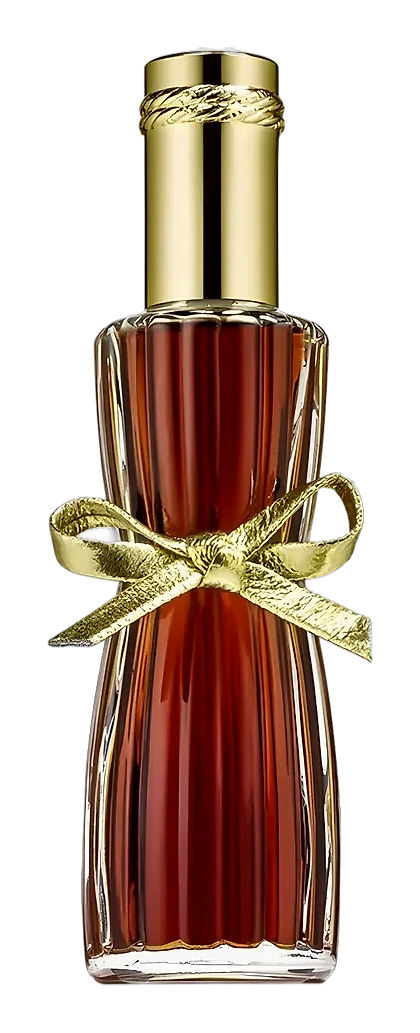
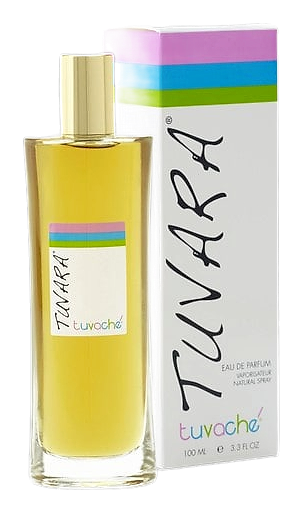
Tuvara arrived in 1948 as a quiet counterpoint to the aldehydic excess of its era. While competitors leaned into projection and drama, Tuvaché chose restraint, letting each ingredient announce itself before blending into the whole. The amber flask bottle, understated and geometric, broke from the ornate flacons common to the decade. This clarity of vision positioned Tuvara as an early statement for modernist American perfumery, where substance mattered more than spectacle.