The Story
Why it exists.
The beginning
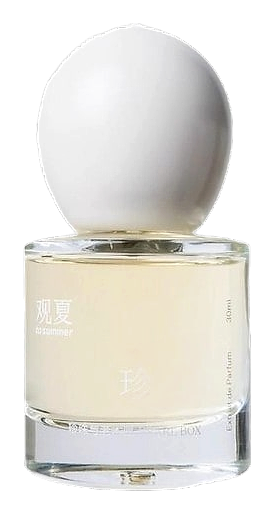
Pearl Box arrived in 2025 as part of To Summer's Open & Close collection, a meditation on what persists and what transforms. The name itself holds the tension: a pearl, luminous and enclosed, nested inside an old wooden box, weathered and warm. The perfumer, Frank Voelkl, worked with this duality throughout the composition, softness held by structure, elegance earned rather than performed. It's a fragrance about time, about the way certain things become more beautiful the longer they've been around.
The note structure is where the Chinese heritage quietly surfaces. Phoebe zhennan, Chinese nanmu, a wood prized in classical Chinese craftsmanship for its fine grain and enduring warmth, anchors the heart alongside the rose. This isn't rose borrowed from Grasse; it's rose tempered by a different aromatic tradition, one where sandalwood relatives and ancient timbers set the tone. The result is a rose that doesn't demand attention. It waits for you to come to it.
The evolution
The opening arrives cautious. Ho Wood's camphorated coolness, pink pepper's brief spark, saffron's honeyed warmth, all present, none announcing. As the fragrance develops, the heart begins to surface: Phoebe zhennan asserting its sandalwood-adjacent presence while the rose keeps its voice low. Orris and labdanum add powdery depth without tipping into sweetness. The drydown is where the cedarwood earns its name. Aged, deliberate, joined by cashmere wood's plush softness and ambroxan's mineral clarity. Musk stays close, skin-warm, intimate, the exhale of someone who's been in the room all along. What remains is a faint wood-and-powder warmth that suggests the fragrance was always part of the room, never fighting for it. The scent wears as an understated presence throughout its wear, revealing itself gradually rather than declaring its arrival.
Cultural impact
Pearl Box arrives at a moment when Chinese niche perfumery is gaining quiet recognition beyond domestic borders. Earlier releases have introduced the house's voice: East-Asian botanical specificity, restrained composition, and an interest in elegance as attitude rather than statement. Pearl Box continues this approach. It doesn't compete with Western mega-houses or try to translate its heritage into familiar accord structures. It simply offers a different aromatic vocabulary, Phoebe zhennan instead of conventional sandalwood, powdery rose reframed by aged cedar.