The Story
Why it exists.
The beginning
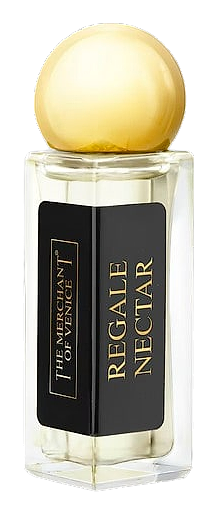
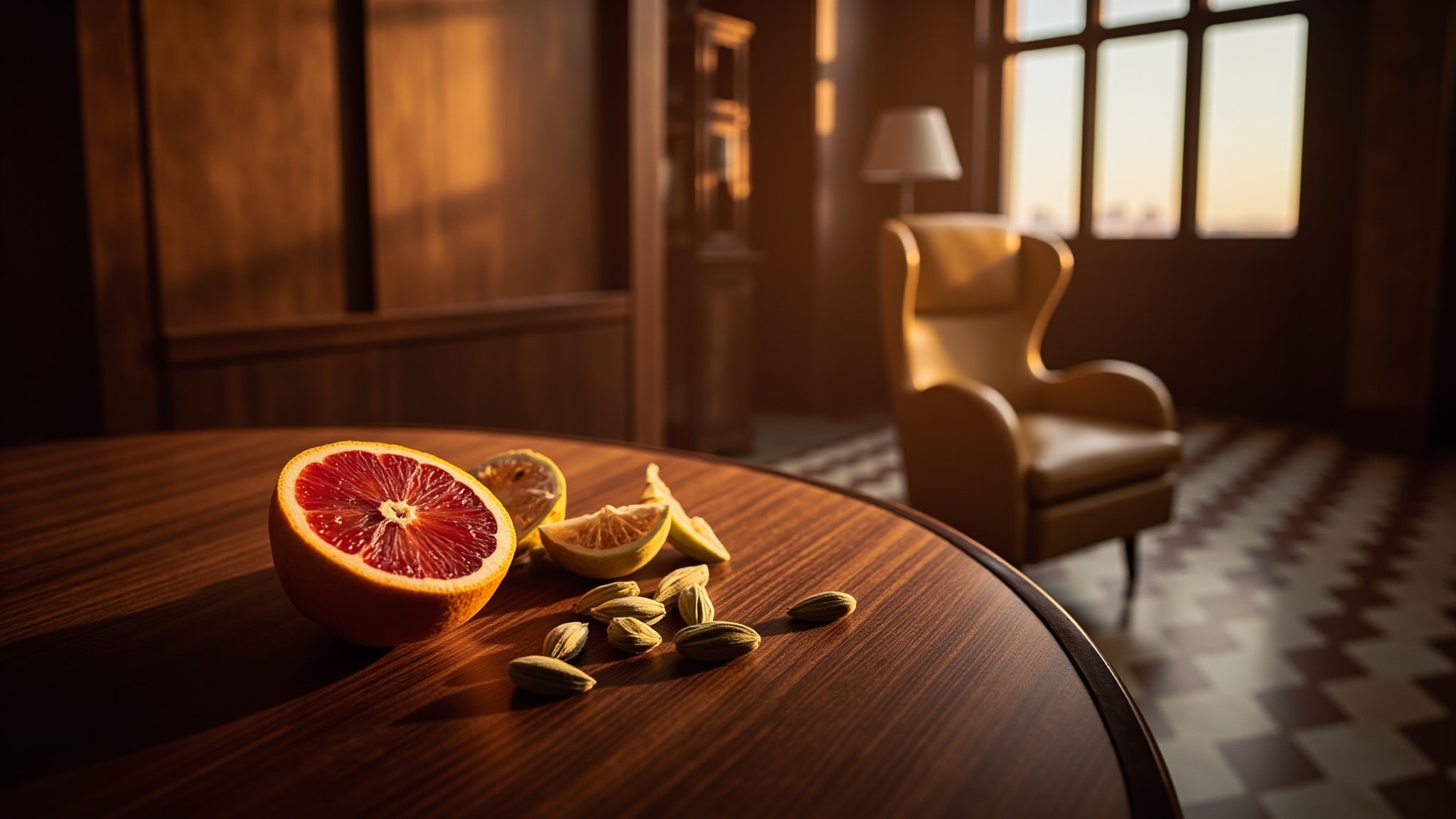
Regale Nectar arrived in 2024 as part of The Merchant of Venice's Nectars Collection, a line of fragrances the house has built around a specific kind of composition: dense, resinous, and built to wear close to the skin. Perfumer Gaël Montero built the scent around a clear thesis. Take the bright lift of Italian blood orange and the aromatic snap of geranium, then let them fall into something older and denser. The result isn't nostalgic, exactly. It's more like a room that still remembers the party. The opening crackles with that citrus energy, almost edible in its ripeness, before the cardamom slides in underneath with a dry, peppery warmth that pulls the composition off the bright ledge and into the dark.
What's interesting here is how the citrus and resin architecture stacks. Blood orange and cardamom open bright and almost foodlike, but they're not being playful. They're setting up a fall into guaiac wood, Haitian vetiver, and Somali frankincense, materials that read ashy and grounding rather than green. The base, vanilla, leather, and Siam benzoin, adds a resinous sweetness that behaves more like a balm than a dessert. The whole thing moves from lift to gravity in under an hour, and that quick transition is part of the appeal.
The evolution
The first 15 minutes are a bright collision. Blood orange hits the air with a tart, almost pulpy energy, then cardamom curls in underneath, dry and warm, and Egyptian geranium adds a green-aromatic edge that keeps it from going sweet too fast. It's the loudest the fragrance will ever be. Around the 30-45 minute mark, the citrus peels back and the heart takes over. Haitian vetiver arrives smoky and earthy, guaiac wood adds a tarry depth, and the Somali frankincense starts to glow. This is where Regale Nectar finds its center of gravity. The aromatic green from the opening is gone, replaced by something that smells like polished wood and warm stone. By hour two, the base is fully in charge.
Cultural impact
Regale Nectar sits in a specific corner of the amber-woody category: warm and resinous, but with a citrus-spice lift that keeps it from feeling like just another smoky flanker. The seasonal data from early wearers skews heavily toward fall and winter, with day and night votes split evenly, suggesting it reads as versatile rather than occasion-specific. For those drawn to smoky ambers with a brighter opening, it offers a composition that balances its dense base materials against a top end that still has something to say.