The Story
Why it exists.
The beginning
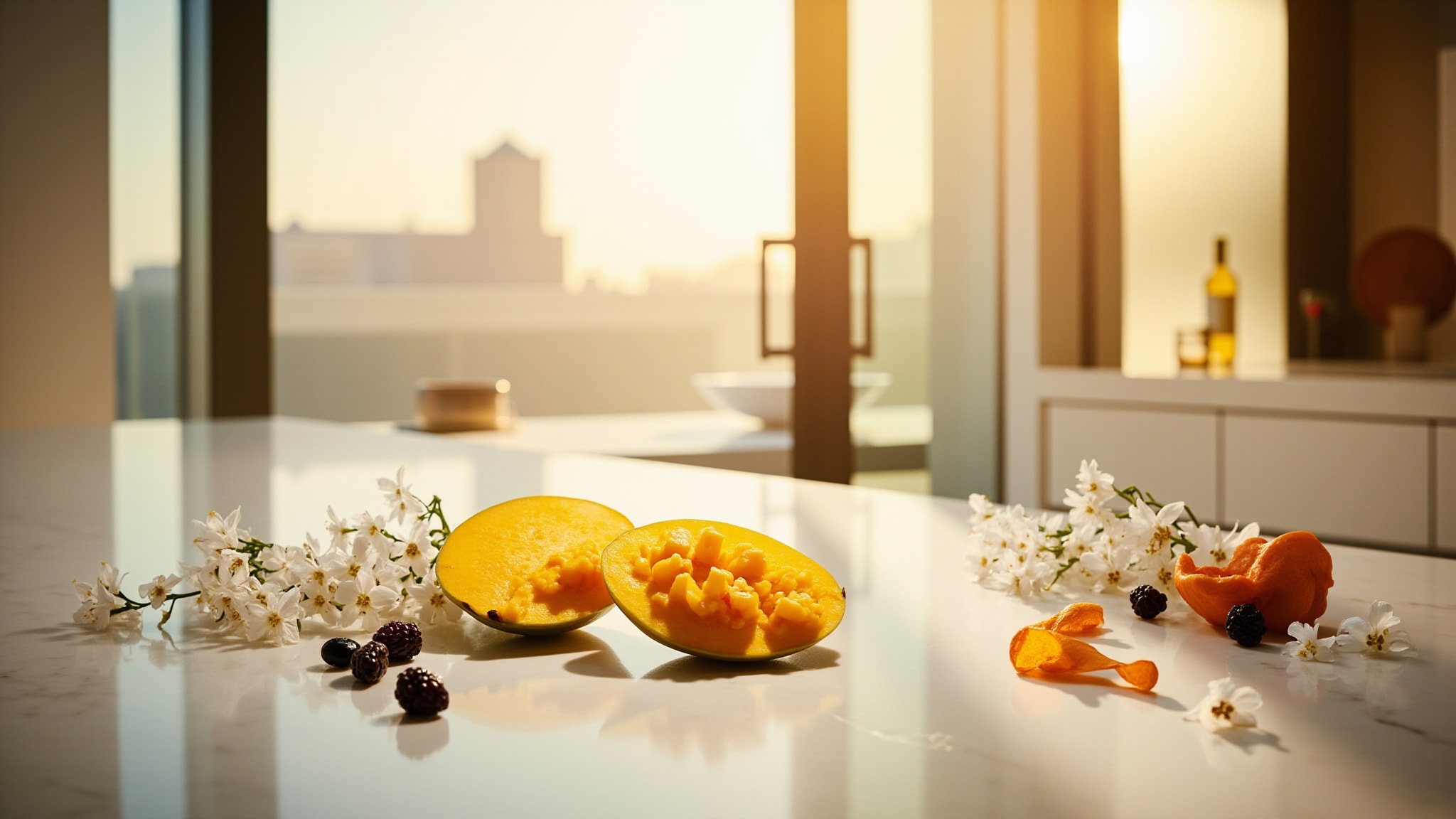
Carmen Dances arrived in 2000 from Elise Pearlstine, the perfumer behind Tambela Natural Perfumes. The composition grew from her fondness for mango, which appears in the fragrance's opening notes. That origin explains the shape of the whole thing. This isn't a perfume built around polite rose accords. It starts with ripe, tropical fruit and then refuses to sit still, layering jasmine, tuberose, and osmanthus over a base of amber and tobacco. The name carries the same energy. Carmen, as anyone with a Spanish soundtrack knows, dances. And this fragrance does too, moving between bright and warm, green and amberous, without settling into a single mood.
What makes the composition worth lingering on is the collision. Mango water and galbanum put a green, almost cut-grass edge against tropical sweetness. Then the heart adds tuberose, a note with real theatrical nerve, alongside boronia and osmanthus. Those florals bring sweetness of a different kind, closer to skin and honey than to fruit. The base is where it gets interesting, too. Amber, ambergris, and sandalwood give it warmth and a faint saltiness, while tobacco introduces dry leaf and smoke without tipping into cliché. Fruit on top, flowers in the middle, earth and smoke underneath.
The evolution
The fragrance moves through a lively sequence of fruit, citrus, green notes, and dense white florals before settling into a warm base. Mango water and Meyer lemon arrive bright and almost wet, mandarin adding a sharper citrus edge while galbanum cuts a cool green line through the fruit. It smells like biting into something ripe on a hot afternoon, then washing your hands with something sharp. Give it time and the citrus recedes, replaced by blackcurrant and a dense cluster of white florals. Tuberose leads here, creamy and slightly fleshy, with boronia and osmanthus layering honeyed sweetness over jasmine. That's the part that earns the name. It doesn't politely whisper. It performs. Then the base arrives to change the temperature. Tobacco and sandalwood bring a dry, woody grain. Amber warms everything, ambergris adds a mineral salt, and ambrette settles a soft musk underneath.
Cultural impact
Carmen Dances belongs to a quietly cult corner of natural perfumery, where the audience already knows what Tambela is about and comes for the eccentricity. Its 2000 debut places it before the wave of mango-and-vanilla fragrances that later crowded the fruity floral shelf, and it stays distinct from that crowd through galbanum's green edge and a tobacco drydown that feels grown rather than added. The kind of scent that gets noticed precisely because it doesn't follow the polished consensus.
The House
Tambela Natural PerfumesTambela Natural Perfumes is an American fragrance house founded by wildlife ecologist and perfumer Elise Pearlstine. The studio is known for composing fragrances from plant-derived materials, including essential oils, absolutes, resins, and other natural aroma ingredients. Its catalog moves between botanical, aromatic, green, and unusual accordions, with compositions such as Blue Jasmine, Pink Pepper, Tea Olive, Carmen Dances, Verdigris, and Magnolia. The name Tambela refers to a village in southern France where Pearlstine’s connection to natural perfumery took root. Tambela’s identity combines a clear commitment to natural materials with a sense of place, giving its fragrances a character that is often more textured and exploratory than a conventional floral wardrobe.
The Creator
Elise PearlstinePearlstine’s style is rooted in natural perfumery and attentive observation of botanical materials. Her compositions begin with how plants, trees, pollinators and predators participate in scent, then translate those relationships into fragrance.