The Story
Why it exists.
The beginning
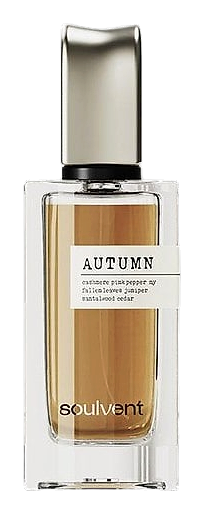
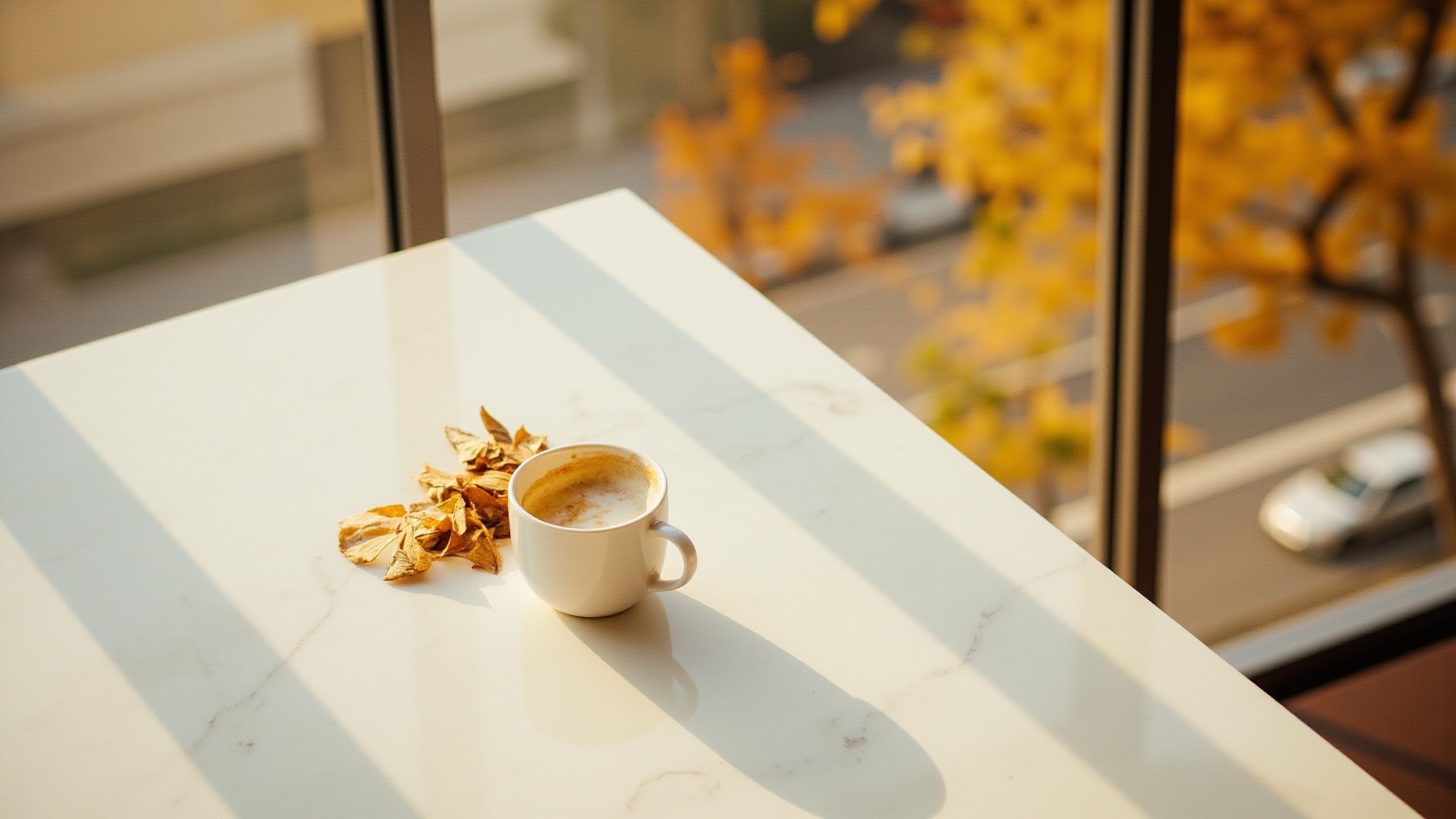
Autumn's Embrace draws its breath from a single walk down Wukang Road in Shanghai during fall. The brand's own framing puts you there: dressed in a cashmere coat, savoring a latte on a warm afternoon, lazy and relaxed, stepping into the season as it thickens. Soulvent built the scent around that moment, the kind where the city slows and you notice leaves for the first time in weeks. The brand treats fragrance as memory translated into aroma, and this composition reads as a postcard from a very specific afternoon, where myrrh and cream meet the cool dry of a leaf-strewn path.
What makes this work is the tension between comfort and quiet austerity. The opening cream note reads soft, almost edible, but it's the myrrh underneath that gives it gravity, a resinous warmth that keeps the sweetness from floating off. Then the dry leaves and cedar arrive, and the fragrance stops being a dessert and starts being a place. The dried leaves accord is doing the heavy lifting: it provides the crunch, the decay, the seasonal honesty that prevents the tonka and sandalwood base from settling into something generic.
The evolution
The first ten minutes belong to cream and myrrh, sweet and resinous, slightly spiced, with a faint chemical edge that some wearers love and others bounce from. By the thirty-minute mark the cream recedes and cedar takes the wheel, dry and cool, bringing the dry-leaves note forward, that dusty, papery crackle of something that fell a week ago. The heart holds for a few hours, a quiet woody space where cedar and leaves do most of the talking, and the fragrance settles into something almost meditative, the kind of scent that rewards a slower pace. Then, somewhere around the four-hour mark, the base arrives with sandalwood and tonka, soft and nutty, settling into skin with a milky warmth that lingers into the next morning. Moderate sillage, a personal-space scent that rewards patience over projection.
Cultural impact
Autumn's Embrace draws its entire concept from a specific place and season, translating the atmosphere of Wukang Road in Shanghai during fall into a wearable composition. The fragrance is built around the idea that scent can carry a setting, that a particular afternoon can be reconstructed note by note for anyone willing to wear it. The approach treats place as material, as something to be worked with the way a perfumer works with resin or wood, and the result is a scent that reads less as an abstract autumn and more as a postcard from one very particular street at one very particular hour.