The Story
Why it exists.
The beginning
Inhale is a breath before a confession, that suspended moment when the chest fills and the words haven't landed yet. The composition was built with Philippine Courtière, a perfumer whose work tends to live in the gap between brightness and depth. For Inhale, that meant starting with a clean citrus triad and pushing it toward something warmer, spicier, less decorative. Bergamot, lemon, and mandarin do their usual job of opening doors, each one pulling a slightly different lever on the air. Bergamot lands first, that bitter-fresh peel quality that makes a room feel ten degrees cooler. Lemon sharpens behind it, almost metallic in its clarity.
What's structurally interesting here is the pepper stack in the middle. Black pepper, cardamom, and pink pepper rarely share a composition because they pull in different directions. Black pepper bites. Cardamom rounds. Pink pepper tilts sweet, almost fruity. Together they create a heat that isn't one-note. Each layer enters with its own timing, which keeps the heart alive longer than it would otherwise survive. The black pepper dries the air out a little. The cardamom fills the space it leaves.
The evolution
The first thirty minutes belong to the citrus. Bergamot leads, bright and slightly bitter, the kind of zest that lives just under the skin of the fruit. Lemon sharpens behind it, almost tart, giving the opening a clean edge that catches the air. Mandarin softens everything so the triad doesn't read as cleaning product. There's a clean-skin quality, almost soapy if you're not paying attention, but the citrus has real depth here. It doesn't just sit there sparkling. It has something underneath, a kind of warmth that builds quietly while the top notes are still working the room. That warmth turns out to be the peppers, arriving properly around the forty-minute mark. Not all at once. Black pepper first, dry and immediate, almost like cracked peppercorn on a warm plate, the kind of bite you feel at the back of the tongue.
Cultural impact
Inhale sits comfortably in the citrus-spice-earth category that has become a quiet cornerstone of contemporary perfumery, the kind of composition that refuses to pick a single mood and instead lets brightness, heat, and depth rotate through the same space. Its structure is what makes it wearable: a clean opening that earns the spices waiting underneath, and a base that grounds everything in soil rather than sweetness. What lingers most about wearing it is how it changes its mind halfway through. The first impression is lifted, almost buoyant, and you'd be forgiven for assuming that's the whole story.
The House
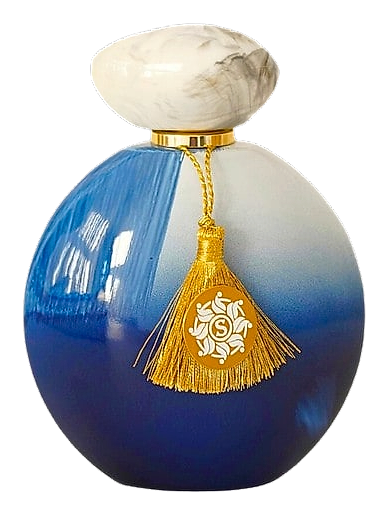
Soul Of MineSoul Of Mine emerged in the early 2020s as a niche fragrance house that frames scent as a conduit for feeling. The brand introduces each perfume as a vignette of love, translating moments of innocence, desire, and reflection into aromatic form. Its catalogue, which grew from the first launch in 2022 to a steady stream of releases through 2024, offers collectors a concise yet varied library that balances bright florals with deeper, resonant accords. By positioning scent as narrative rather than commodity, Soul Of Mine invites wearers to explore personal memory through aroma.
The Creator
Philippine CourtièreCourtière favors a crystalline top that sparks curiosity, followed by a heart built on fruit-laden florals and a base of warm woods or amber. She often layers Turkish rose with subtle hints of lychee, then anchors the blend with sandalwood or cedar from sustainable sources.