The Story
Why it exists.
The beginning
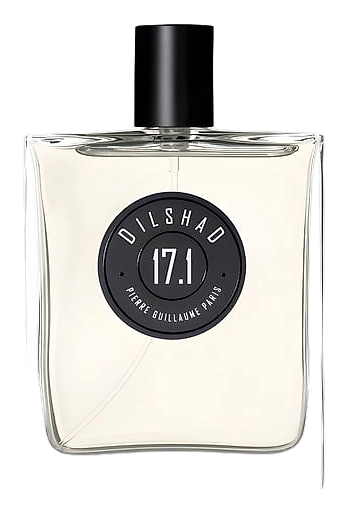
Dilshad comes from the Persian for "one who brings happiness." A name with purpose: Pierre Guillaume built this around Iranian pistachio, taking something naturally bitter and green and asking whether it could become something you'd want to stay inside. The answer lives in the rest of the pyramid. Pistachio opens. Cream and flowers take over. The question isn't whether the combination works, but whether you'd noticed it wasn't supposed to.
Pistachio and tuberose don't share a natural alliance. One is crunchy, slightly charred, green at its edges. The other is lush, tropical, almost excessive in its sweetness. Guillaume bridges them with almond milk, a note that works as translator, letting each element find the other without collision. The nuttiness softens. The florals don't overpower. Instead of two opposing forces, you get something that holds together.
The evolution
The opening hits immediately. Roasted Iranian pistachio, green and present, arrives without apology. The first hour brings a slow hand-off, nuttiness giving way to the florals as the green quality fades, though one enthusiasts reviewer noted the pistachio doesn't linger as long as they'd hoped before something sweeter takes over. By mid-drydown, the composition turns sweeter and creamier, a quiet bloom that intensifies rather than fades. Sillage stays moderate throughout, present but never filling a room. The base arrives with musk and opoponax, the sweet-creamy character deepening, warmth staying close to skin.
Cultural impact
The 2024 launch arrives at a moment when nut-themed fragrances have accumulated a real following. What separates this one is the naming, Dilshad, with its Persian roots and explicit reference to Iranian pistachio, grounds the composition in a specific cultural identity rather than chasing a trend. The collector drawn to Pierre Guillaume Paris tends to want something with a story, and this delivers one that's harder to find elsewhere.