
The Story
Why it exists.
The beginning
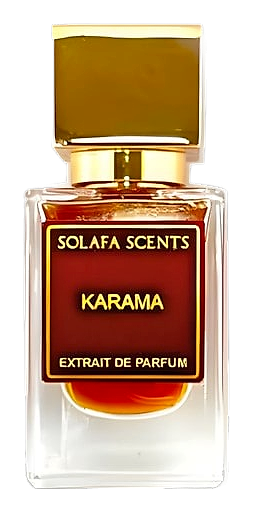
Taha Syed is the perfumer behind Karama, and the composition doesn't read like something built to fit a category. It reads like something that grew out of a working familiarity with what oud actually smells like when it hasn't been smoothed over or simplified for mass appeal. The fragrance draws on Cambodian and Indian oud, two materials that carry different weights on the skin, and it builds outward from there. Saffron opens with real force, giving the first ten minutes a metallic, almost electric heat before the composition settles into its deeper registers. Leather takes over once that initial brightness cools, and the papyrus threading through the heart keeps things from collapsing into the heavy, syrupy territory that oud compositions often drift toward. It stays dry.
What gives Karama its texture is the layering of two distinct tobacco expressions, one reading like a freshly opened cigarette pack, the other like a pipe that's been smoked for years. The contrast between them keeps the heart moving; you never settle into one static image of smoke. The papyrus adds an almost papery dryness that keeps the leather from going heavy, while the saffron and Cambodian oud open with enough force to cut through any setting.
The evolution
The first ten minutes are loud. Cambodian oud and saffron hit like something lit in the next room, and rose threads underneath like perfume on someone already across the room. Then the registration shift begins, and leather and papyrus start replacing the oud's sharper edges. The two tobacco notes show up at different intervals. One arrives early in the heart, crisp and almost mentholated in its brightness. The other waits, the older one, pipe-aged and quiet, anchoring the base long after the opening has finished arguing. Frankincense and jasmine complicate the heart just enough to keep it from being a one-note leather portrait. Hours later, what stays on skin is amber and myrrh with that older tobacco woven through, still warm, still reading like someone's presence in a chair they left an hour ago.
Cultural impact
Karama wears like a fragrance designed for presence. Wearers describe it as a scent for someone who doesn't enter a room quietly, and the two tobacco pairings, rendered as distinct expressions rather than one generic smoke note, give it a complexity that rewards attention. The saffron-oud opening divides opinions between those who find it transportive and those who find it sharp, and that split tends to define how people remember the fragrance. It's a polarizing composition by nature: the materials are loud, the sillage is unapologetic, and the drydown doesn't apologize for any of it.