
The Story
Why it exists.
The beginning
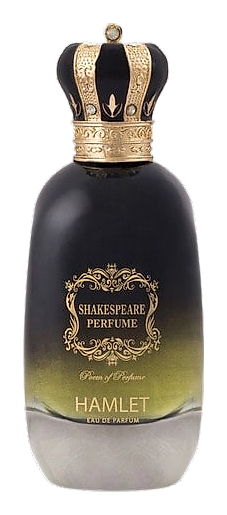
Hamlet arrived in 2017 as part of a collection that reads like a reading list. No perfumer is named. No country of origin announced. What the brand did announce was Shakespeare, and specifically, the play that asks what we owe the dead, the living, and ourselves. The fragrance doesn't attempt to smell like a character. It attempts to smell like the space a character occupies. That interior landscape of obligation and paralysis, of thinking instead of doing, that's what the composition maps. The citrus opening is the performance, the public face. What comes after is the private weight that accumulates when no one's watching.
Twelve base notes. That's the first thing people notice when they look at the pyramid. Oud and ambergris, civet and birch, saffron and sandalwood, most perfumers would call that crowded. The brand called it necessary. The fig in the heart is the unexpected move. It keeps the rose from becoming a greeting card. Keeps the jasmine from tipping into something purely romantic. Fig is watery, slightly green, almost introspective, it pulls the sweetness back toward something more complex. When the animalics arrive in the base, there's a foundation ready to hold them. Civet and ambergris together is a deliberate choice. They're the oldest pairing in perfumery, going back to when animalic meant actual animal.
The evolution
The citrus opens like morning. Lemon and bergamot arrive together, bright and sharp, the kind of opening that makes you think you've bought the wrong fragrance. You haven't. Give it twenty minutes. The heart arrives not as a replacement but as an interruption. Rose and fig, ylang-ylang underneath, the sweetness is there but it comes with a green undercurrent that keeps it honest. The jasmine adds something slightly indolic, a whisper of body, a reminder that flowers grow from soil. Then the base arrives. This is where the fragrance makes its argument. Ambergris first, warm, salty, animalic without being aggressive. Then civet, darker and more feral. Oud and saffron push up from beneath. The drydown doesn't replace the opening so much as absorb it. As the hours pass, there's still something lingering on skin, amber and wood settling into something quieter, more intimate.
Cultural impact
Shakespeare Perfumes positioned itself at the intersection of perfumery and high literature. By naming a fragrance after Shakespeare's most famous tragic hero, the brand drew on four centuries of dramatic associations and the weight of a cultural touchstone. The choice to use theatrical character names as fragrance titles moved away from the industry norm of focusing on romantic or natural imagery, instead offering consumers something with narrative complexity. This approach offered products with cultural resonance and depth beyond typical marketing appeals, inviting wearers into a world where fragrance becomes storytelling.