The Story
Why it exists.
The beginning
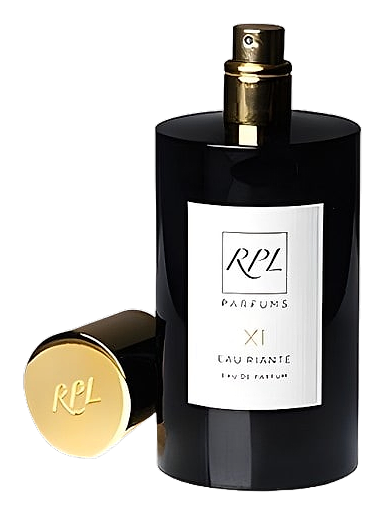
XVIII Tubéreuse arrived in 2016, a release from RPL Parfums, made in Denmark. The Roman numeral XVIII marks its place in the brand's numbered catalogue, a system that reads more like a personal timeline than a seasonal calendar. The composition was built around a tuberose connected to La Mamounia, a location whose gardens produce the flower heavy and narcotic in the evening air. The brief was to keep the tuberose cool. No syrup, no soliflore sweetness. The opening trio of cardamom, ginger, and mint was chosen to pull the bloom sideways before it could settle into its default lushness.
What makes the structure interesting is the restraint at every level. The top notes do real work, three green, sharp materials that would overpower a more delicate heart, yet here they simply redirect attention. Cedar and oak in the middle create a bridge between the cool spice opening and the creamy floral, acting as the frame around the painting. The base is deliberately minimal: vetiver and sandalwood, nothing more. No amber, no vanilla to catch the tuberose when it falls, though the main accords do list a sweetness that runs underneath the composition, a trace rather than a statement.
The evolution
The first ten minutes belong to the spices. Cardamom leads, dry and almost smoky, then ginger cuts in with a clean heat that has nothing to do with fire. Mint threads through both, bright and slightly mentholated, pulling the whole opening toward something that reads more like a North African souk at dusk than a typical floral launch. Around the fifteen-minute mark, the tuberose finally arrives. It doesn't bloom outward. It unfolds inward, creamy and dewy, filtered through the remaining green bite of the ginger. The cedar shows up shortly after, not as a dry wood note but as a living tree, bark still warm. By the two-hour mark, the composition has settled into a quiet agreement: sandalwood rounds the bottom, vetiver adds a faint green root note, and the tuberose sits in the center, no longer competing with the spices but absorbing them.
Cultural impact
XVIII Tubéreuse sits in a specific corner of the niche world: the floral composition that refuses to perform like one. It occupies a space where tuberose is treated as architecture rather than ornament, where the flower is presented with its edges intact instead of smoothed into submission. Some want more tuberose, more sweetness, more presence. Others appreciate it precisely because it whispers. The scent doesn't argue for itself. It simply sits on the skin and lets the wearer decide whether restraint reads as elegance or as absence.