
The Story
Why it exists.
The beginning
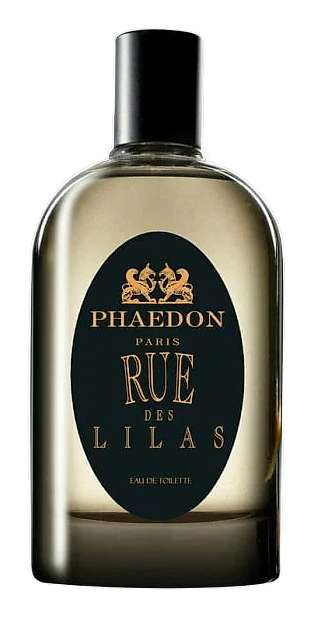
Rue des Lilas translates to Lilac Street, a name that sets the entire premise before you even smell it. The fragrance belongs to the Phaedon house and was composed by Pierre Guillaume, known for his precise, concept-driven work that often treats a single material as a serious compositional challenge rather than a pleasant afterthought. Here the chosen material is lilac, rendered in a way that resists the usual treatment. The name itself sets the scene: a Parisian side street in mid-spring, when lilac bushes spill over garden walls and the air turns faintly green. Guillaume worked with the flower as it actually smells in nature rather than how it's been sold for decades.
What makes the structure interesting is the link between lily of the valley and lilac through indole, a molecule usually associated with orange blossom and jasmine sambac. Both florals share that molecule, and Guillaume exploited the overlap to fuse them into something stranger than either flower alone. The indole gives the composition a quality some wearers describe as a strange kind of beauty beneath the powder. Brazilian rosewood underneath adds warmth. White musk softens the landing.
The evolution
On skin, Rue des Lilas opens with a green hit that arrives before any sweetness. The aldehydes register almost immediately, lending the opening a brief sparkling lift that catches the air and demands attention. Within fifteen minutes, the indole starts pushing through. The lilac thickens, gets a little strange in the way real lilacs can smell when conditions aren't perfect. That edge is what separates it from the softer offerings on the shelf. By the one-hour mark, the lily of the valley smooths things out, and the Brazilian rosewood surfaces. The musk arrives last, not loud but persistent, carrying the composition into a drydown that ends powdery, clean, and faintly green. On fabric, it persists well into the next day, holding its shape with impressive tenacity for a floral composition.
Cultural impact
Rue des Lilas earned a following among collectors for doing what few lilac fragrances attempt: refusing to behave. It was discontinued at some point before being re-released in 2016 as a limited edition, which only deepened its appeal among those who had discovered it before or during the reissue. The fragrance occupies a particular place in the world of floral compositions because it treats lilac as a serious material rather than a simple pretty note. That approach has made it a reference point in discussions about what single-flower compositions can achieve when the perfumer refuses to soften every edge.