
The Story
Why it exists.
The beginning
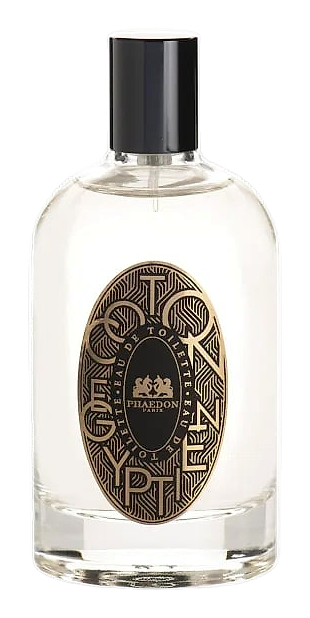
Coton Egyptien arrived in 2012 from Pierre Guillaume, the perfumer who created it for Phaedon. Here, Guillaume was asked to imagine a flower that doesn't really exist in perfumery's vocabulary. The cotton flower yields no essential oil, no absolute worth distilling. So the task became an act of reconstruction. What does Egyptian cotton smell like before it becomes thread? What does the plant carry in its fibers that we recognize but can't extract? The answer turned out to be less about the plant itself and more about what the cotton flower would have drawn from the soil. The brand's own copy frames it as the cedar sap the cotton flower would have sucked and transformed into a floral vapor.
The construction is almost architectural. Rather than building a traditional floral, the composition treats cotton flower as a ghost, a negative space around which real materials arrange themselves. Musk stands in for softness. Galbanum supplies the green, sharp counterweight that keeps the whole thing from collapsing into baby powder. And cedar, referenced explicitly in Phaedon's own description as cedar sap, acts as the woody spine that the imagined flower would have fed on. It is a clever trick, scent constructed around absence.
The evolution
The first ten minutes feel almost too restrained. A whisper of green from the galbanum cuts through whatever air you're standing in, then steps aside quickly. Around the fifteen-minute mark, the white musk begins to surface, powdery but never cloying, the kind of softness that smells like clean laundry pulled from the dryer and left to cool on a wooden chair. The cedar shows up not as a lumber-yard note but as something almost mineral, dry and faintly resinous, keeping the whole composition honest. By the two-hour mark it has settled into what Phaedon clearly intended, a cotton-flower apparition built from cedar sap and white musk and not much else. Sillage is moderate, the kind of scent that stays within arm's reach and doesn't fight to expand.
Cultural impact
Coton Egyptien sits in an unusual corner of niche perfumery, a clean, skin-level scent whose construction revolves around a flower that has no extractable essence. Where it diverges from most clean-muscle fragrances is in its construction around absence, the cotton flower as an imagined note built from cedar sap and musk. It's a quiet piece, the kind collectors wear privately rather than showcase. The fragrance has found a small, devoted audience among wearers who appreciate conceptual perfumery, those who want a scent that says something about material and process rather than projecting loudly into a room. It rewards close attention.