
The Story
Why it exists.
The beginning
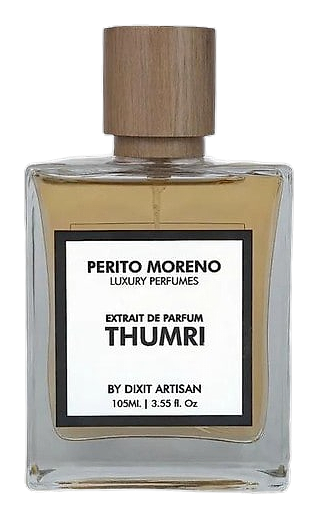
Thumri takes its name from a genre of Hindustani classical music, one built on shringar, the aesthetic of love and erotic longing, where the vocalist bends notes around emotion the way a river bends around stone. Perfumer Nitish Dixit set out to translate that feeling into composition. Released in 2024, Thumri draws on a vocabulary of classical Indian perfume materials, layering rose upon rose and oud upon oud, letting each note echo the last in a structure more reminiscent of a raga's cyclical return than a modern accord. The intention feels clear: to capture the emotional register of shringar itself, not merely reference it, to make a love letter in full voice rather than a postcard from one.
What makes Thumri structurally unusual is the sheer weight it carries in rose and oud before any sweetness arrives. Most rose-forward fragrances cushion the flower with fruit, sugar, or musk. This one lays down Turkish rose and Taif rose simultaneously, then drops oud into both the top and the base, so the same material bookends the experience. The floral opening is almost architectural in its symmetry, two roses pressed against each other with the oud stitching them at both ends.
The evolution
On skin, the first fifteen minutes feel dense with rose and a faint medicinal edge from the oud and bergamot above it. The Turkish rose arrives almost jammy, then the oud sharpens it, turning the sweetness into something resinous and slightly bitter. There's a quick brightness from the bergamot that cuts through the weight just enough to let the roses breathe, a lift before the composition settles back into its darker, more grounded register. By the thirty-minute mark, the tobacco and turmeric begin their slow negotiation. The tobacco brings a dry, almost leathery warmth, while the turmeric adds a cool earthiness underneath, like opening a wooden box of old spice. This is also when the animalics begin surfacing, but quietly, more suggestion than statement.
Cultural impact
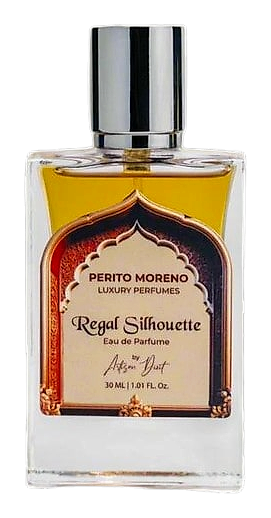
Thumri arrived in 2024 as one of the more ornate compositions in Perito Moreno's catalogue, drawing heavily on classical attar materials such as oud, spikenard, and Indian turmeric. It bridges Indian perfumery traditions with contemporary niche composition in a way few launches attempt, placing centuries-old ingredients alongside modern formulation choices rather than treating the two traditions as separate worlds. The result is a wear that reads as cultural crosspollination on skin, a meeting point rather than a borrowing.