
The Story
Why it exists.
The beginning
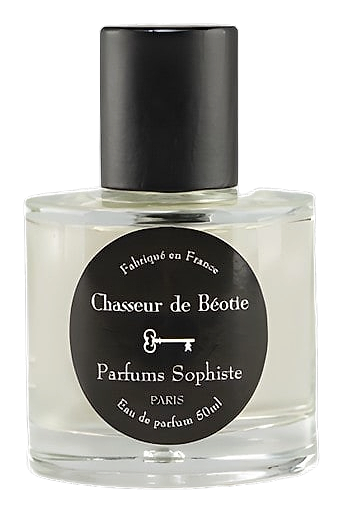
Chasseur de Béotie arrived in 2013 as one of ten compositions released by Parfums Sophiste. The name itself is a provocation: Boeotia, the ancient Greek region famously dismissed by Athenian intellectuals as culturally flat. To call oneself a hunter there is to declare intent where others found nothing worth pursuing. The fragrance wears that thesis in composition. Perfumer Crystelle Darchicourt built it around smoked tea rather than the obvious leather-and-tobacco formulas the accord might suggest, a choice that signals an interest in ideas over comfort. Grapefruit opens the door. The woods take over. The leather, when it arrives, is the kind you'd find on a secondhand bookbinding rather than a new car seat.
Most fragrances that list tea as a note treat it as garnish, a whisper of bergamot-adjacent brightness meant to freshen a heavier base. Chasseur de Béotie flips that. The smoked tea is structural, not decorative, carrying the same weight as the cedar and sandalwood at the heart. That rebalancing is what separates it from the woody-leather compositions it might otherwise be grouped with. The grapefruit, similarly, refuses to behave like a top note.
The evolution
The opening belongs almost entirely to grapefruit zest and smoked tea, the citrus providing a sharp bitter edge while the tea lends a tannic, almost leathery warmth before any leather has technically arrived. The two fight briefly. Neither wins cleanly. As the composition moves into its middle phase, the woods take over: cedar brings something pencil-shaving clean, sandalwood brings its usual cream, and the combination reads as a single dense material rather than two separate notes. The smoked tea persists underneath, now reading more like distant woodsmoke than the leaf itself. Eventually the grapefruit fades to a ghost, and the leather settles in properly: suede-dry, slightly animalic, the kind of leather note that feels more lived-in than new. The musk in the base is what carries the final hours, skin-close and warm, with a faint powdery sweetness that wasn't apparent at the start.
Cultural impact
The smoked tea takes a few minutes to announce itself, and some never get past the grapefruit opening. Those who do tend to stay. The name does quiet work, and the fragrance wears its references lightly, never requiring the wearer to explain what Boeotia was or why hunting there might be worth mentioning. The composition rewards patience: the opening is bright and almost aggressive, the grapefruit hitting with a bitter intensity that suggests the rest of the fragrance will follow a familiar path. It doesn't.