
The Story
Why it exists.
The beginning
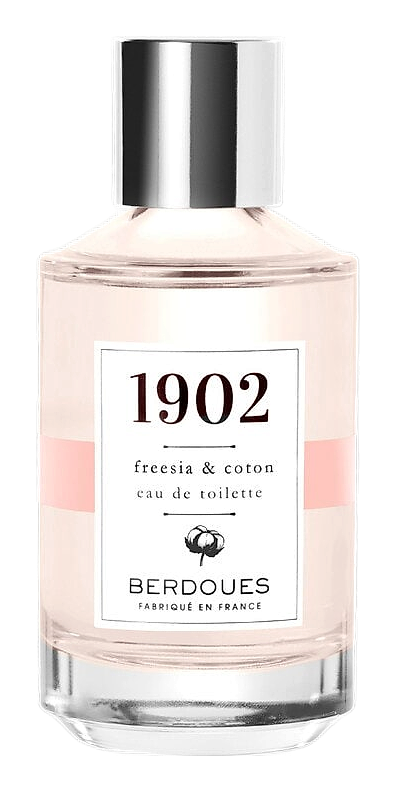
1902 Coton sits at the heart of Parfums Berdoues' heritage collection, a line the house built around the same year Guillaume Berdoues opened his Parisian salon. The name itself is the brief: coton, cotton, the idea of something washed, pressed, and softly familiar. Born into a catalogue designed as a return to French cologne's quieter roots, Coton doesn't aim to dazzle. It aims to recall. The composition is built around three anchors, bergamot, orris root, and musk, a triangle that old French perfumery leaned on when simplicity was the point. There is no dramatic reveal here, no top-note theatre. Just the confidence of a house that knows light hands can carry a whole fragrance, and has done so since the salons of the Rue de la Paix.
The choice of orris, rather than a louder floral, is what gives Coton its particular gravity. Orris butter brings a powdery, suede-like hush to a composition, and here it acts as the bridge between bergamot's brightness and musks' skin-warmth, binding them into something that reads less like a fragrance and more like a texture. The musk notes settle close, and together the three create a loop, fresh opening, powdered heart, soft settle, that mirrors the way cotton itself behaves: absorbing what it touches, then letting it go.
The evolution
The first fifteen minutes are the brightest Coton ever gets. Bergamot leads, lightly citrus, not sharp, more like the zest left on your fingertips after peeling fruit. That brightness doesn't shout, it suggests. Within twenty minutes, orris root begins to take over, and the fragrance tips from citrus into something cooler, more powdery, almost chalk-like. This is the most distinctive phase, the one that makes Coton Coton. The musk arrives gradually underneath, a warm white static that lifts the powder into something wearable rather than dusty. By the second hour, the bergamot is mostly memory. What's left is orris and musk, pressed close to the skin, doing the thing this fragrance does best: nothing much, gently, for as long as it can. Longevity stays modest, becoming a soft skin scent before long, though on fabric, a scarf, a collar, it lingers noticeably, sometimes into the next morning. The drydown isn't a transformation. It's an acceptance that the comfort was always the point.
Cultural impact
1902 Coton belongs to a quieter corner of perfumery, one that prizes restraint over spectacle and comfort over statement. It draws on a long French tradition of soapy, musky colognes meant for everyday wear rather than evening drama, and it wears exactly as that tradition suggests: close to the skin, familiar rather than fussy. There's no theatrical opening, no grand floral gesture, just a soft hush of bergamot giving way to orris and a musk that settles in like something you've always worn. In a market crowded with loud, projection-heavy launches, Coton sits firmly in the camp of scents that ask nothing of the wearer except to be worn.