The Story
Why it exists.
The beginning
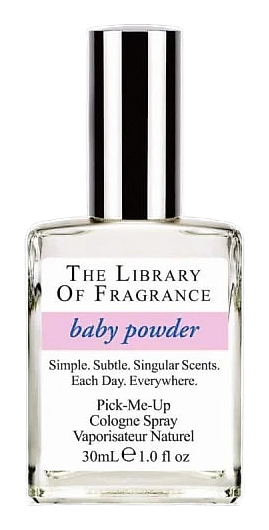
Baby Powder exists because Christopher Brosius believes fragrance should trigger recognition, not require translation. While other houses built elaborate pyramids of abstraction, Demeter asked a simpler question: what if a baby powder fragrance actually smelled like baby powder? The answer arrived in 2006, a Cologne that opens on talc and never pretends to be anything else. No metaphor. No interpretation. Just the scent of a freshly powdered cheek, captured in a bottle and offered at a price that invites experimentation. The concept sounds obvious. It isn't. Capturing the exact sensory memory of powder, its softness, its warmth, its clean mineral clarity, without making it smell medicinal or flat takes precision. Brosius and the Demeter team spent considerable time refining the balance between the talc note and the supporting musk, ensuring the composition stayed soft without disappearing entirely.
What makes Baby Powder's structure unusual isn't the notes, it's the absence of the traditional pyramid. Most fragrances layer top, heart, and base to create depth over time. Baby Powder does something different: it presents a single accord where talc, powdery florals, and musk arrive almost simultaneously and evolve together rather than replacing one another. The talc note is the key to everything. In perfumery, talc can skew clinical if not balanced correctly, too much and it reads as antiseptic, too little and the powder effect vanishes. Here, the talc is softened by the floral heart and grounded by musk, creating a skin-close effect that feels organic rather than constructed.
The evolution
Baby Powder opens on talc. Not bright, not sharp, just the immediate, soft clarity of powder settling onto warm skin. There's no citrus top note to complicate things, no sharp opening salvo. Just clean, mineral softness. Within the first twenty minutes, the powdery florals and musk arrive. They don't replace the talc, they layer beneath it, adding warmth and a skin-close intimacy that feels like the moment after a bath, when skin is still warm and the air still holds a trace of powder. The transition is seamless. One moment it's talc; the next, it's the full, quiet comfort of the heart. The drydown is where musk does its work. The powder softens but doesn't disappear. The florals fade. What remains is a warm, clean base that clings close to the skin for four to six hours on most skin types. It never projects loudly, this is not a fragrance that announces itself across a room. It's the kind of scent someone notices only when they're close enough to touch your arm. On fabric, the talc note lingers longest, sometimes reappearing faintly the next morning.
Cultural impact
Baby Powder occupies a rare position in the fragrance world: the benchmark. When someone asks what a literal baby powder fragrance should smell like, this is the reference point. It carved out a category of one, not fresh and aquatic, not sweet and floral, just powder. Pure, clean, honest powder. The 2006 launch arrived at a moment when the fragrance market was shifting toward accessibility and personal expression. Demeter's democratic pricing and anti-pretense philosophy fit that cultural moment precisely. Baby Powder, in particular, became the answer to a question most fragrance houses weren't asking: what if we just made the thing smell like the thing?