The Story
Why it exists.
The beginning
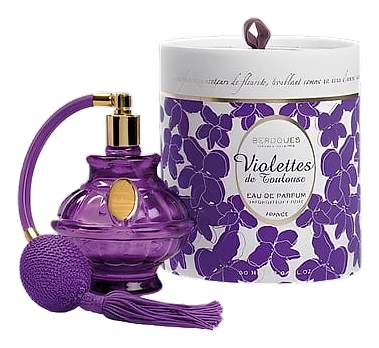
Violettes de Toulouse arrived in 1936, named for a city in the south of France celebrated for its winter violets. The fragrance was conceived as a soliflore built on place and memory, a perfume that sought to capture something specific: the flower, the city, the season. Violet soliflores existed at the time, but many were fleeting, their scent evaporating soon after application. This one aimed for something more enduring, a violet that would linger on the skin rather than vanish within minutes. The perfumer understood that violet's beauty lay in its delicacy, and worked to preserve that quality while allowing the fragrance to develop depth over time.
What makes this fragrance interesting is its structure. Violet is a paradoxical material: gorgeous but fleeting, requiring skill to extend its presence on the skin. The perfumer worked around this challenge using specific techniques that bring a green, stem-like quality to the composition, along with aromachemicals that recreate violet's scent while lasting longer on skin. Here, bergamot opens bright and cool, setting a crisp initial impression. The heart layers lilac, jasmine, and cyclamen with a fruity undertone that keeps things from sliding into pure nostalgia.
The evolution
The opening is cool. Bergamot and green notes give you that snap of morning air, stems just cut. It lasts a brief moment before the flowers take over. The heart is where Violettes de Toulouse earns its name: lilac and jasmine, almond blossom softening everything, iris adding that powdery undercurrent. Fruity notes keep it from feeling dated. As the fragrance evolves, the initial brightness settles into something more intimate. The drydown brings musk and sandalwood, close to skin, creating a subtle aura that remains present without being overwhelming. The sillage is moderate, designed for close quarters rather than broadcast. On your own skin, it lingers: soft, familiar, almost memory-like. It doesn't reinvent itself as it fades. It just slowly becomes part of you.
Cultural impact
Violettes de Toulouse has outlived most of its contemporaries. Discontinued now, it survives in vintage boutiques and collector circles as a touchstone of what a French soliflore could be. For those who want violet without the saccharine sweetness of modern flankers, it offers something rarer: powdery warmth and iris depth that feels considered rather than commercial. The fragrance stands on its own as a vision of French floral elegance that still holds up. Its combination of floral notes, powdery iris, and subtle fruitiness creates something that feels timeless rather than dated.