
The Story
Why it exists.
The beginning
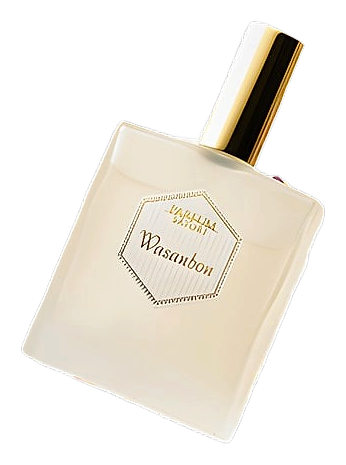
Wasanbon takes its name from wasanbon, a premium Japanese sugar candy known for its delicate, melt-on-your-tongue texture. Unlike commercial sugars, wasanbon carries a distinct identity shaped by regional craft traditions. The perfumer found in this sweet an unlikely muse: the idea that something so simple, refined sugar, could inspire a fragrance. The scent arrived in 2013, joining a collection of works approached as statements rather than mere products. It became an exercise in capturing subtlety itself: the moment before sweetness resolves, the blur between edible and olfactory, the quiet power embedded in restraint.
What makes Wasanbon structurally unusual is the way its sweetness unfolds gradually. Lemon and grapes provide a tart, almost translucent opening, the kind of brightness that reads more like light than fruit. It's only as that top recedes that the heart reveals itself: sugar, yes, but sugar tempered by mimosa's airy floral quality and honey's depth, with lily of the valley adding a green undertone that prevents the composition from tipping into pure confection.
The evolution
Lemon and grapes hit first. Bright, translucent, slightly tart, the kind of opening that feels like light rather than fruit. Within minutes, the grapes soften and the lemon retreats, making room for warmth to gather beneath the surface. Sugar begins to emerge, but it's filtered through mimosa and lily of the valley, so the sweetness arrives quietly, without announcement. This is the phase that earns Wasanbon its name: a powdery, almost dusty sweetness that recalls the last moments of light before dusk fully settles. The honey becomes more apparent as the heart matures, lending a faint animal warmth to the composition. By hour two, iris and vanilla have taken over the foreground. The powdery quality intensifies, not in a heavy sense, but in the way powdered sugar catches air when a bag is opened.
Cultural impact
Wasanbon occupies an unusual position in the niche fragrance landscape: a Japanese sweet-gourmand that offers something different from the category's typical tendencies. Where many gourmand fragrances announce themselves boldly, Wasanbon speaks more quietly. This makes it an alternative for wearers who want sweetness without performance, someone drawn to intimate, close-range beauty rather than room-filling presence. The Satori house is well-regarded among those who follow Japanese niche perfumery for its philosophical approach and restrained aesthetic.