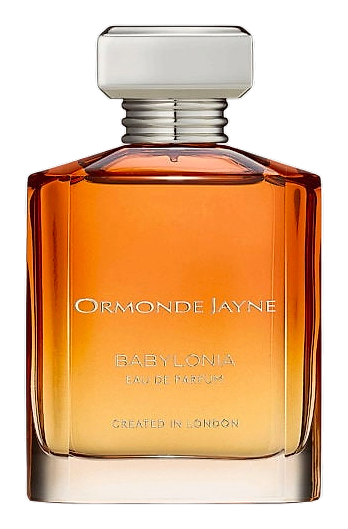

The Story
Why it exists.
The beginning
The name Babylonia conjures ancient cities and Silk Road caravans, a nod to Ormonde Jayne's La Route de la Soie collection, where each fragrance maps a different stop along the old trade routes. This one takes its inspiration from the legendary city itself, imagined as a place of beauty, abundance, and lingering perfume. Linda Pilkington built Babylonia as a romantic gesture, a fragrance that feels like the memory of a place rather than a place itself. The brief was simple: powdery florals, soft warmth, something that lingers the way incense once did in those ancient market streets.
What makes Babylonia unusual is the bluebell. It's not a standard perfumery ingredient, more of a British botanical specificity, the kind of note that only makes sense to someone who has actually walked through a bluebell wood in spring. Here it anchors the heart, giving the violet and iris a green, slightly dewy quality that keeps the powdery aspect from going flat. The praline in the base isn't heavy either, it's more a suggestion of sweetness than a statement, the kind of warmth that reads as intimate rather than indulgent.
The evolution
The opening is tart and bright. Blackcurrant arrives with its characteristic candy-cassis edge, softened by davana's wine-like warmth and lifted by pink pepper. It doesn't stay fruity for long, within fifteen minutes the bluebell takes over, and that's where Babylonia becomes itself. Green, slightly forest-floor, unmistakably floral. The violet and iris layer in, pushing the composition toward that powdery register that defines the heart. By the second hour, the praline and vanilla have settled underneath, adding warmth without sweetness overload. The drydown is intimate, white musk and benzoin close the composition, keeping everything close to the skin. Moderate sillage. Doesn't announce itself. Lasts six to eight hours on most skin types.
Cultural impact
The name Babylonia draws directly from one of the ancient world's most iconic civilizations, conjuring images of the Hanging Gardens, the Tower of Babel, and the banks of the Euphrates. Ormonde Jayne's La Route de la Soie collection maps fictional stops along the Silk Road, and Babylonia represents a city that existed at the crossroads of trade, culture, and mythology. In naming fragrances after these historic waypoints, the house participates in a broader niche perfumery trend that romanticizes ancient geography, mirroring how Byredo's Bal d'Afrique or Serge Lutens' Fementa evoke distant times and places. The powdery floral genre itself has deep roots in perfumery, from Guerlain's Liu (1952) to the contemporary revival of orris-focused compositions.