The Story
Why it exists.
The beginning
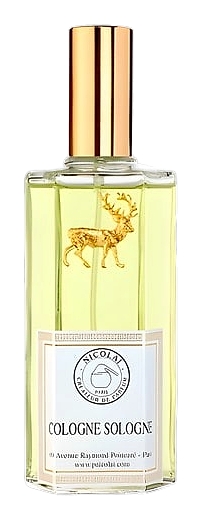
The name says it all. Sologne is a region in France's Loire Valley, lakes, pine forests, the kind of quiet countryside that doesn't perform for anyone. Patricia de Nicolaï named this 1989 cologne after that place, and the scent matches the geography: crisp citrus top notes that clear the air, white florals that bloom in the shade, and a base of benzoin and patchouli that grounds everything in resinous forest floor. She wasn't building a generic cologne. She was translating a landscape.
What makes Cologne Sologne distinctive is its concentration of Tunisian neroli, Patricia de Nicolaï has called it the finest she knows. Most colognes use neroli as a fleeting accent. Here it anchors the composition, bridging the citrus opening and the lavender-rosemary heart. The benzoin in the base isn't a typo or an afterthought, it adds a warm, slightly vanillic resin that slows the drydown considerably, giving the cologne an unexpected depth that rewards wearing it for more than five minutes.
The evolution
The opening hits bright and sharp, bergamot and lemon cutting through like morning air. The orange blossom doesn't compete; it hovers underneath, sweetening the citrus just slightly. Within fifteen minutes, the lavender and rosemary arrive, shifting the energy from sharp to herbal. This is the transition zone, where a cologne becomes something more. The neroli persists through the heart, but the rosemary keeps things grounded, slightly bitter, never allowing the florals to go soft. By the second hour, the benzoin takes over. The scent moves closer to skin, becoming a warm, resinous presence that whispers rather than projects. The patchouli and musk settle in for a quiet drydown that lasts another two to three hours on most skin types, not a sillage monster, but a faithful companion that stays close.
Cultural impact
Cologne Sologne occupies an unusual position: a 1989 cologne that refuses to smell dated. Where many citruses from that era have faded into detergent-likeness, this one holds. The Tunisian neroli and benzoin base give it a warmth that aging has only deepened, not harmed. It's worn by people who know classical perfumery and don't need a fragrance to announce them. No celebrity endorsements, no viral moment, just steady affection from those who've found it.