
The Story
Why it exists.
The beginning
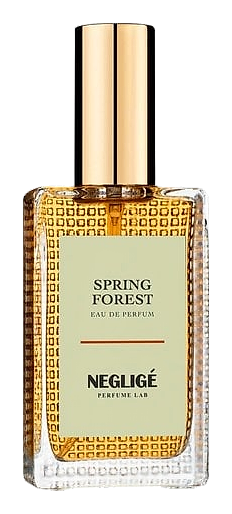
Maria Chaikovskaya built her perfumery practice on chemical precision, analytical balances, glassware, a bench in an apartment in Odessa. By 2021 she had released a dozen fragrances, each treated as a formulation experiment rather than a finished statement. Spring Forest arrived as her first committed work in the green-aromatic register, and she used the name deliberately. It doesn't announce spring. It gets there. The concept drew from the layered ecology of a forest in seasonal transition, not the postcard version of spring in bloom, but the specific moment when cold evergreen still dominates and only certain pockets have begun to warm. Chaikovskaya built the opening to honor that ambivalence, layering sharp conifer materials that read more wintry than welcoming, then engineered the heart and drydown to gradually overtake that coldness.
What makes the Spring Forest composition interesting is how deliberately it resists the obvious moves of a spring fragrance. No bright citrus in the top. No watery florals. Instead, the opening leans into conifer and fougère, materials that carry the smell of cool, damp air and forest floors. It's a colder interpretation than most would expect from the name. The mimosa in the heart does the structural work that makes the fragrance unusual. In most compositions, mimosa functions as a soft floral secondary. Here it becomes the bridge between the sharp green opening and the powdery violet-oakmoss base.
The evolution
Spring Forest opens immediately. The juniper and spruce create an aromatic coldness that hits fast, that sharp, slightly medicinal quality of pine needles crushed underfoot in late winter. There's a brightness here that's bracing, almost antiseptic. Not soft. Not welcoming. This is the fragrance making its opening position clear. Around 15 to 30 minutes, the hand-off happens. The conifer notes don't disappear, they recede into the background while the heart notes move forward. Mimosa arrives with its characteristic waxy, yellow-floral quality, but it's the cypress and cedarwood that shape the new character: a creamy-woody softness that feels like the first warm patch in a cold forest. Wild berries add a subtle textured sweetness without tipping into fruit. Snowdrops, one of the more unusual materials in the composition, contribute a cool, delicate, slightly aquatic green note that keeps the heart from becoming heavy. The drydown is where the fragrance earns its name.
Cultural impact
Spring Forest occupies an unconventional position in niche fragrance, aromatic-woody but structured around green florals rather than the masculine fougère conventions that usually define the category. For collectors who track under-the-radar houses, it's become a reference point for how restraint and complexity can coexist in a green composition.