
The Story
Why it exists.
The beginning
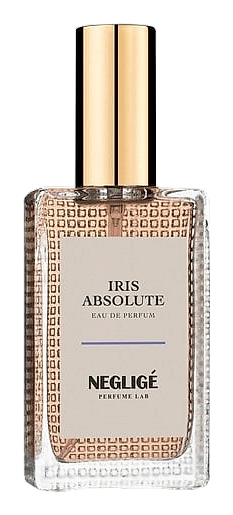
Iris Absolute asks a simple question: what happens when the laboratory becomes the ingredient? Not the source, but the source. The iris absolute sits at the center of this composition, allowed to exist without apology. Pink pepper and white peony arrive first, creating an opening that feels both bright and soft. They do not compete with the iris. Instead, they build a context around it. The composition lets iris be cool and powdery and present, without asking it to perform. The result is a fragrance where the iris reads as architecture rather than decoration, as structure rather than ornament.
The tension here is the point. Cool, powdery iris against warm, almost buttery orris root. Two expressions of the same material, pulling in opposite directions. The red peony in the heart layer adds another dimension: as if two versions of the same flower are having a quiet argument. The white peony in the opening, synthetic and precise, does something unexpected. It grounds the whole thing. Keeps the iris from going abstract. The peonies recede as the heart develops, but their warmth remains, preventing the composition from reading as cold.
The evolution
The opening hits clean. Pink pepper with a slight metallic brightness, white peony following close, soft, almost sweet, but not cloying. Within minutes, the iris arrives and everything shifts. The powdery quality takes over, that cool violet stillness that defines the heart. The peonies recede but do not disappear. They add warmth to what could read as cold. The orris root shows up slowly, bringing a subtle buttery depth that complements rather than competes. Woody notes arrive last, and they stay. The base lingers longer than expected, subtle at first, then warming as the iris and peony quiet down. On skin, the fragrance holds for several hours. The sillage stays close, intimate rather than announced. By the end of the day, there is a faint trace. Powder on skin. Something that was there.
Cultural impact
Iris has been prized in perfumery since ancient Egypt, where it was used in cosmetics and ceremonial unguents. The flower yields a precious absolute with a characteristic powdery, violet-like character. In the Western world, iris became synonymous with aristocratic elegance during the Renaissance, when noblewomen wore iris-scented gloves and courtiers carried iris-root pomanders as status symbols. The flower's cultural resonance extended to heraldry, where the fleur-de-lis represented royalty and divine authority.