The Story
Why it exists.
The beginning
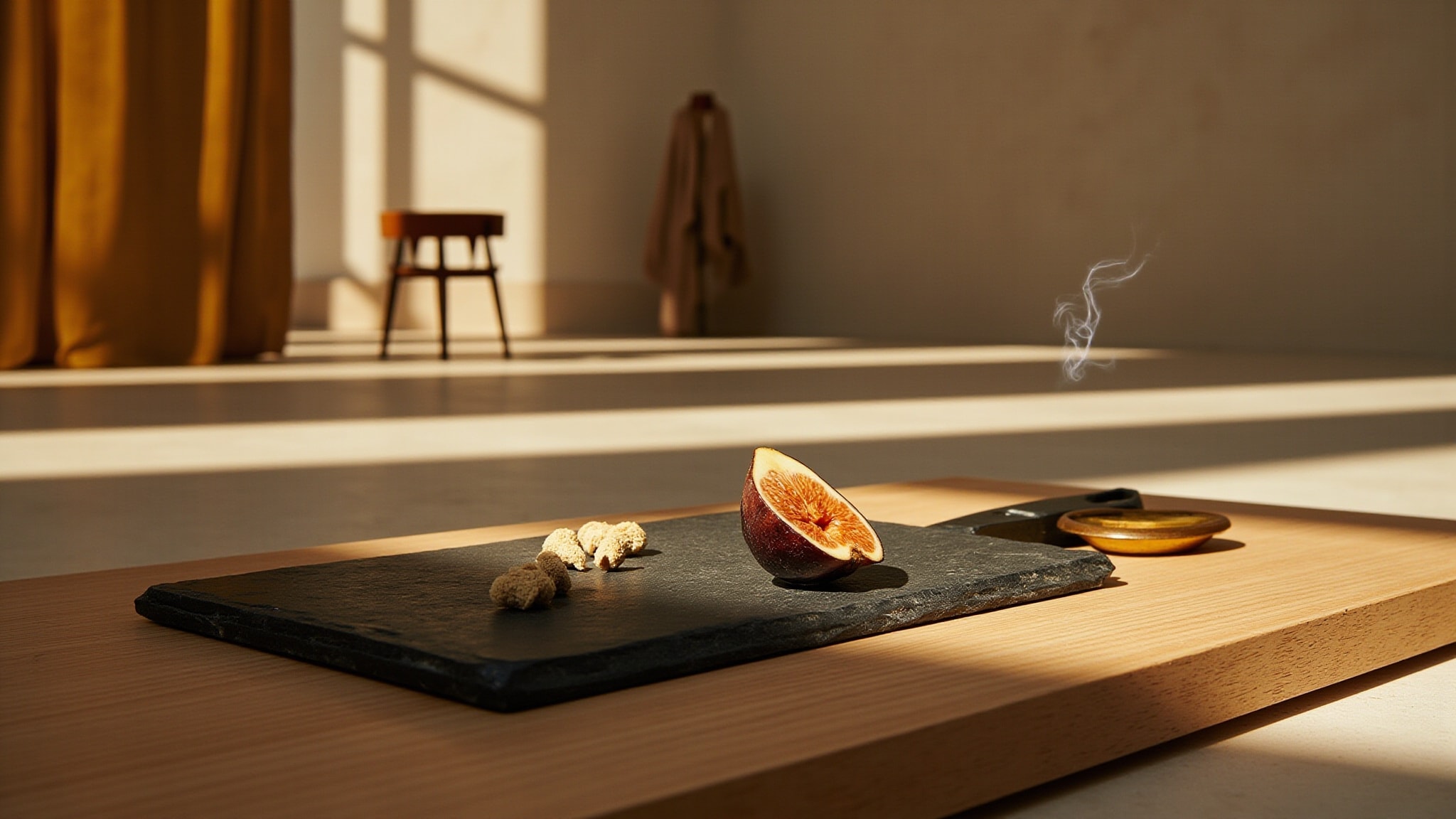
Figue Orientale arrived in 2015 as part of an early N-Cigale release, a fragrance line built around the idea that a single fruit can carry a whole mood. The name splits its intent cleanly: fig, that fleshy, sun-warmed fruit, and orientale, the perfumery tradition built on amber, resin, and warm spice. The brief reads like a postcard from the eastern Mediterranean, a bazaar at golden hour, wooden stalls stacked with dried fruit and spice, where sweetness and smoke share the same shelf. It's the brand's take on what happens when fig reaches east, a hand-off from the orchard to the bazaar's warmth. What makes the composition work is how it treats the fig note less as a literal fruit and more as an atmosphere, something milky and green at once, touched with the dust of sun-dried goods.
The interesting choice here is restraint. Figs in perfumery tend to swing full dessert, fig cake, fig jam, fig honey. This composition keeps the fruit stripped back and treats it as a structural element rather than the star. Stemone adds a green, almost leafy snap that pulls the fig away from pastry territory before it gets there, while Hedione lifts the top into something brighter than the warm notes alone would suggest. Clove and nutmeg pile in from behind, and the oriental register builds through guaiac wood and amber. The result reads gourmand without ever crossing into confectionery.
The evolution
The opening is busy in the best way. Cardamom, clove, dried fig, and nutmeg arrive together, not as a neat succession but as a crowd already mid-conversation. Hedione threads a clean, slightly metallic brightness through the spice, the way afternoon sun hits a marble counter. Mandarin adds a whisper of orange peel. After about 30 minutes, the crowd thins. Cedarwood and violet take over, joined by heliotrope, which brings a powdery, almost almond-soft sweetness. Stemone keeps the fig recognizable here, still fruity but now greener, more grounded. The heart reads cooler than the opening, which is the surprise most people miss. It feels like a different fragrance for a few minutes, powdery violet and dry wood, before the base settles in around the 90-minute mark. Guaiac wood gives the smoke, coumarin warms the edges, vanilla rounds everything without sweetening it, and amber does what amber does, holds the whole thing together with a low, resinous hum. What lasts is the fig and the wood.
Cultural impact
Figue Orientale holds a particular appeal for wearers who want fig without the pastry-shop sweetness, and oriental warmth without the heavy density of mainstream amber-oud compositions. Its position is specific: it reads as gourmand-adjacent but never fully crosses into confectionery, and its warmth comes from texture and wood rather than syrup or dense resin. This makes it attractive to anyone tired of the heavier end of the oriental spectrum but still wanting something with body and lasting power.