
The Story
Why it exists.
The beginning
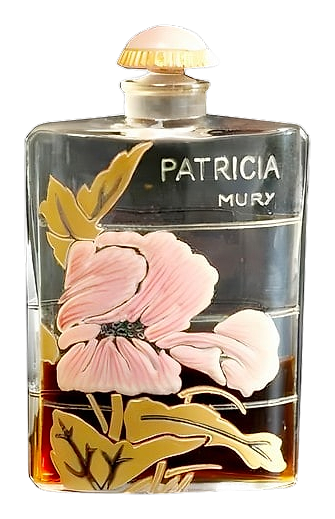
Patricia arrived in 1926 from Mury Paris, a Parisian house shaped by the elegant classical perfumery of the early twentieth century. The launch places it firmly in an era when floral composition stood beside the roots of French fragrance making. Records describe Patricia as a floral perfume for women, with jasmine, rose, vanilla, caramel, coffee, and sandalwood defining its character. Without a documented muse or named perfumer, the origin is best understood through the formula itself: a polished floral that lets sweetness emerge slowly, then settle into warm woods rather than remaining a simple bouquet.
The interesting part is the balance between a classic floral heart and its warmer accents. Jasmine and rose give Patricia the poise associated with formal French perfume, while vanilla, caramel, and coffee pull the composition toward a gourmand depth. Sandalwood then supplies a smooth, steady foundation. The result avoids the sugary finish of a dessert-like scent because the floral materials remain in charge, lending elegance and softness as the gourmand notes unfold.
The evolution
Patricia begins with the poised impression of jasmine and rose, bright enough to feel alive without the sharpness of a citrus opening. As the floral heart settles, vanilla and caramel introduce a warm sweetness, joined by the roasted depth of coffee. The drydown feels quieter and more polished, with sandalwood and musk carrying a smooth, close-to-skin trail. Over roughly 4-6 hours, the sweetness becomes less explicit while the floral character and woody softness remain most recognizable. It lingers as a neat, intimate impression rather than a loud room-filling statement, the sort of fragrance that feels discovered only when someone leans closer.
Cultural impact
Patricia belongs to Mury's register of fragrance as a language of discretion rather than declaration. Its 1926 launch places it within the house's early twentieth-century catalog, where classical floral traditions met shifting tastes across the interwar years. Patricia suits the wearer who values a recognizable floral presence without theatrical projection, a fragrance for polished proximity rather than noisy entrance. Its place in Mury's cultural register is measured and Parisian, closer to a well-kept personal signature than a passing trend.