
The Story
Why it exists.
The beginning
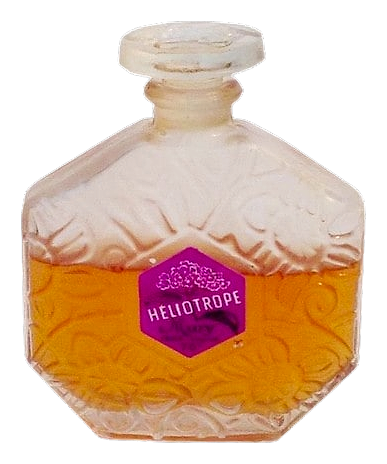
Héliotrope was launched by the fragrance house Mury in 1920. Its name evokes the heliotrope flower, a modest garden bloom associated with compositions centered on powdery floral warmth and almond-like notes. No perfumer is credited in the available records, so the intention is best understood through the scent itself: a floral accord softened by vanilla and a rounded, lactonic milkiness. The composition reveals Mury's refined approach to fragrance, balancing floral clarity with gentle sweetness and a smooth, polished texture.
The unusual part is the warmth that sits beneath such a restrained floral name. Heliotrope begins with a cool impression, while vanilla and almond draw the composition toward skin and sweetness. The floral accord gives the scent an elegant character, and the lactonic notes lend it a rounded, creamy texture. As the fragrance develops, the floral heart remains distinct within the softer accord, while the almond sweetness and milky nuance gradually create a smooth, intimate impression that feels both familiar and carefully composed.
The evolution
Héliotrope begins with a dusting sensation, almost like silk after a careful brushing. The floral accord comes forward as the powder settles, giving the composition its refined, garden-inspired character. Then vanilla and almond take over, turning the airy surface warmer and more tactile. That sweetness never becomes sharp; it moves toward a smooth, milk-like finish, as though the floral notes have softened into cream rather than disappearing. This is where the lactonic accord becomes most convincing, wrapping the composition in a soft, rounded drydown. The result is a nuanced study in contrast: cool floral brightness against warm sweetness, with powder, almond, vanilla, and faded flowers gradually settling into one another.
Cultural impact
Héliotrope shows how a floral name can shape the way a fragrance is imagined. Its name suggests a garden bloom, while its composition balances floral clarity with warm almond sweetness, vanilla, and a rounded lactonic character. The result rewards close attention, revealing how distinct notes settle into a smooth, intimate whole rather than competing for attention. Its understated elegance makes it especially appealing to those drawn to compositions with measured detail and a sense of quiet continuity from opening to drydown.