The Story
Why it exists.
The beginning
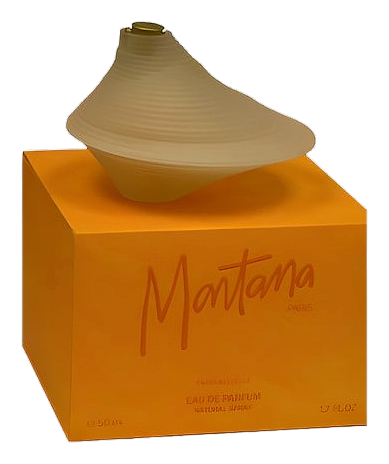
Montana launched Parfum d'Elle in 1990, during a period when the house had fully committed to translating its fashion identity into fragrance. Where Parfum de Peau (1986) established the house's animalic credentials with brute force, Parfum d'Elle took a different approach: it paired white florals with the same architectural structure, proving that Montana's vision could accommodate softness without sacrificing presence. The name translates roughly to "perfume of her", an assertion of identity rather than an invitation for approval. By 1990, Claude Montana's haute couture had been defining Parisian power-wear for over a decade, and the fragrance collection had developed into an extension of that same sensibility: bold, unapologetic, and aware of the space it occupied.
What makes Parfum d'Elle structurally interesting is how it bridges two worlds that don't always coexist gracefully. The top is all citrus and clean heat, bergamot, lemon, lime, mandarin, with a whisper of melon, arriving with the confidence of something that knows it's been noticed. Then the heart shifts the register entirely. Tuberose, hyacinth, lily of the valley, and ylang-ylang don't soften the composition so much as complicate it. These are white florals with presence, not polite ones that apologize for taking up space. The base grounds everything in oakmoss, cedar, tobacco, and vanilla, a chypre structure that gives the florals somewhere to land and something to argue with.
The evolution
The opening announces itself immediately, citrus fruits tumbling over each other with bergamot leading, lemon and lime providing the edge, and a hint of melon that keeps it from feeling like a kitchen cleaner. The ginger underneath adds a clean heat that most citrus-forward fragrances skip entirely. Within the first hour, the florals begin to push through. Tuberose arrives first, bringing its characteristic waxy sweetness and a slight indolic edge that keeps the composition grounded in something real rather than purely decorative. The hyacinth adds a green, almost aquatic quality that lifts the tuberose without diluting it. By the second hour, the composition has settled into its heart phase, creamy, rich, slightly powdery from the lily of the valley. The Brazilian rosewood contributes warmth without sweetness, a wooden note that reads more like incense than lumber. The drydown takes its time. Three hours in, the tobacco begins to assert itself, not smoky, but dry and slightly sweet, like the scent of a room someone has been sitting in for hours.
Cultural impact
Montana occupied a specific position in late-20th-century French perfumery: not the conservatism of heritage houses, not the frivolity of fashion-forward releases, but something with genuine edge. Parfum d'Elle fits within that lineage, a composition that takes the house's chypre expertise and applies it to something with real floral presence. The fragrance appeared at a moment when the perfume market was dominated by lighter, more transparent compositions, which may explain both its cult following and its eventual discontinuation. For those who discovered it, the combination of sharp citrus, assertive white florals, and classic chypre base represented something different: a fragrance that assumed its wearer had nothing to prove.