
The Story
Why it exists.
The beginning
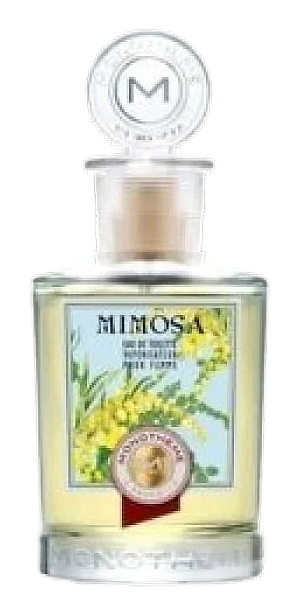
Mimosa, released in 2017 and composed by perfumer Julie Massé, takes its name from a single flower and treats that flower as the whole point of the exercise. In perfumery, mimosa occupies a strange middle ground: it does not read as a classic floral, nor does it behave like a sweet, syrupy blossom in the way rose or tuberose can. There is something dry and hushed about it, a quality that sits somewhere between honey, hay, and the faint bitterness of an almond kernel. The absolute carries a green stemminess too, a vegetal coolness that keeps the sweetness in check. Massé composed this fragrance to put that mimosa note at the center, supported by a bright citrus opening of bergamot and the soft fuzz of nectarine, then grounded by a base of cedarwood, sandalwood, and musk.
What makes this composition interesting is the restraint around the mimosa. There is no vanilla, no rose, no honey drizzled on top to make the flower behave like a gourmand. Instead the structure relies on bergamot and nectarine to lift the opening, violet leaf to keep the green thread honest, and a base of cedarwood, sandalwood, and musk to give it a dry, slightly creamy warmth without ever crossing into sweetness. It is floral the way a linen curtain is white: clean, simple, and doing more work than it lets on.
The evolution
On skin, the opening reads as the greenest and most lifted phase of the wear. Bergamot cuts in sharp and citrus-bright, nectarine softens it with a fuzzy stone-fruit warmth, and violet leaf pushes through with a watery, almost cucumber-like coolness. The mimosa arrives early in the development and becomes the dominant thread that runs through the entire composition. It swallows the opening whole, turning citrus and green into a single powdery haze that feels less like a bouquet and more like a single stem crushed between fingers. As the fragrance dries down, the woods start to surface: cedarwood first, dry and pencil-like, then sandalwood rounding it out with a soft, milky warmth. The musk sits underneath everything, never announcing itself, just keeping the whole composition close to skin and lending a subtle warmth that blurs the line between the fragrance and the wearer's own scent.
Cultural impact
Mimosa occupies a particular place in the broader landscape of floral fragrances because of its unusual character. The powdery-green scent profile sets it apart from more conventional florals like rose, jasmine, or tuberose, offering something quieter and more vegetal by comparison. It appeals to wearers who enjoy florals but want a composition that feels less sweet and less traditionally feminine, leaning instead into a drier, more abstract interpretation of the flower.