
The Story
Why it exists.
The beginning
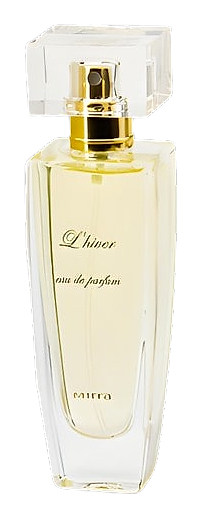
L'hiver enters Mirra's catalog as a seasonal composition with a French title meaning winter. The fragrance treats the season as a state of mind rather than a weather report, leaning into the mood and atmosphere that colder months evoke. Other French-language seasonal titles appear in the catalog alongside it, and L'hiver fits that logic of treating seasons as compositional themes. The release year isn't documented publicly, but the composition itself speaks clearly: this is a cool-season piece, built around the resinous, earthy materials that suit the season when the air turns cold and the light thins.
What makes L'hiver worth paying attention to is the concentration of heavy, earthy materials in its note list: oakmoss, patchouli, rose, jasmine, anise, and fennel. The oakmoss and patchouli bring a green, rooted weight that runs through the composition, while the rose and jasmine add a dusky floral layer rather than a bright or heady one. The anise and fennel pairing up top adds a sharp, almost cold botanical note that reads more like walking past a market stall in winter than any familiar sweet-spice combo.
The evolution
The opening belongs to the anise and fennel, cold and sharp, almost like sucking on a licorice lozenge in freezing air. That sharpness softens as the heart unfolds, with rose and jasmine pushing through, warmer but not sweet, carrying the green earthiness of oakmoss underneath. Patchouli weaves through alongside them, adding depth and a slightly raw, mineral quality to the floral layer. As the scent settles, the resins come forward, settling into a close, mossy warmth that clings to skin rather than filling a room. The green quality from the oakmoss continues to anchor the composition through the later stages, keeping the profile rooted and earthy rather than letting it slide into something sweeter or more amber-laden.
Cultural impact
L'hiver sits within Mirra's seasonal L' series, alongside L'ete and L'automne, treating each season as a distinct mood study. The composition takes winter literally, cold and earthy rather than cozy and vanillic. The profile leans on mossy, resinous, and faintly bitter materials rather than the sweeter, amber-laden approach that dominates much of the seasonal fragrance market. It reads like the scent equivalent of heavy wool, built for someone who thinks winter is when character shows. Production was apparently discontinued, which makes existing bottles harder to find.