The Story
Why it exists.
The beginning
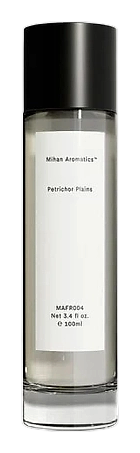
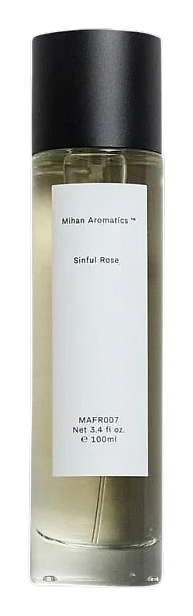
Sinful Rose arrived in 2024 from Mihan Aromatics, a house whose small catalogue turns landscape, memory, and the textures of place into wearable scent. Where other compositions might lean toward green groves or wide-open plains, this one points somewhere else entirely: toward a room that still holds warmth, toward intimacy that lingers after the door closes. Turkish rose anchors the heart, layered against oud, vanilla, and sandalwood in a concentration that refuses to be ignored. The composition reads like the scent of two bodies sharing air, like closeness that hasn't quite faded.
What makes this composition work is the balance between sweetness and gravity. Turkish rose is one of perfumery's most demanding materials, rich and jammy in a way that can easily tip into cloying. Here it shares the stage with geranium at the top, a note that sharpens the rose and keeps it from collapsing into syrup. The geranium's herbal, almost minty quality acts as a bracing counterweight, slicing through the rose's honeyed density and giving the opening a clarity that feels almost architectural.
The evolution
The first spray announces bergamot and geranium in a bright, almost green opening that reads sharper than expected. Turkish rose arrives within minutes, not as a whisper but as a presence, and the geranium's herbal edge keeps it from going soft. The bergamot lifts everything with a citrus sheen that fades gracefully, making room for the rose's full arrival. By the fifteen-minute mark, ginger and tonka bean surface, and the composition shifts from floral to something warmer, more tactile. The rose deepens here, moving from jammy to something closer to dried petals pressed between pages, its initial brightness slowly replaced by a dense, almost resinous sweetness. Around the one-hour mark, oud and benzoin take over the base architecture, and the vanilla begins its slow work, threading sweetness through the darker notes like a binding agent.
Cultural impact
Sinful Rose enters a perfumery landscape where rose-oud compositions have carved out a distinctive space, drawing on centuries of Middle Eastern tradition while appealing to modern tastes. The combination of Turkish rose with oud, sandalwood, and benzoin draws from a well-established lineage, but this particular interpretation brings a small-batch, handmade quality that sets it apart from mass-produced alternatives. The fragrance speaks to a growing appreciation for compositions that prioritize complexity and longevity over simple appeal, offering something that rewards patience and attention.