The Story
Why it exists.
The beginning
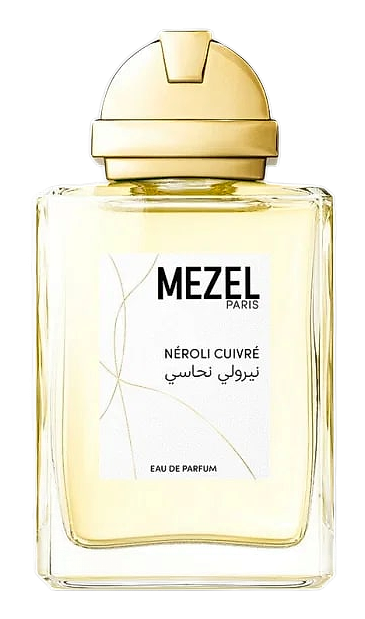
Mezel's Néroli Cuivré arrived in 2024 as part of a new wave of compositions from the house, designed by Mathilde Bijaoui. The brief here centers on the Moroccan orange blossom and its older associations, a flower once tied to ceremony, welcome, and the rituals of receiving guests. Rather than letting the neroli dissolve into something weightless, Bijaoui anchors it with copper, a base note that gives the composition its warm metallic undertone and its structure. It's neroli with architecture, and the interplay between floral brightness and metallic warmth is what carries the whole composition.
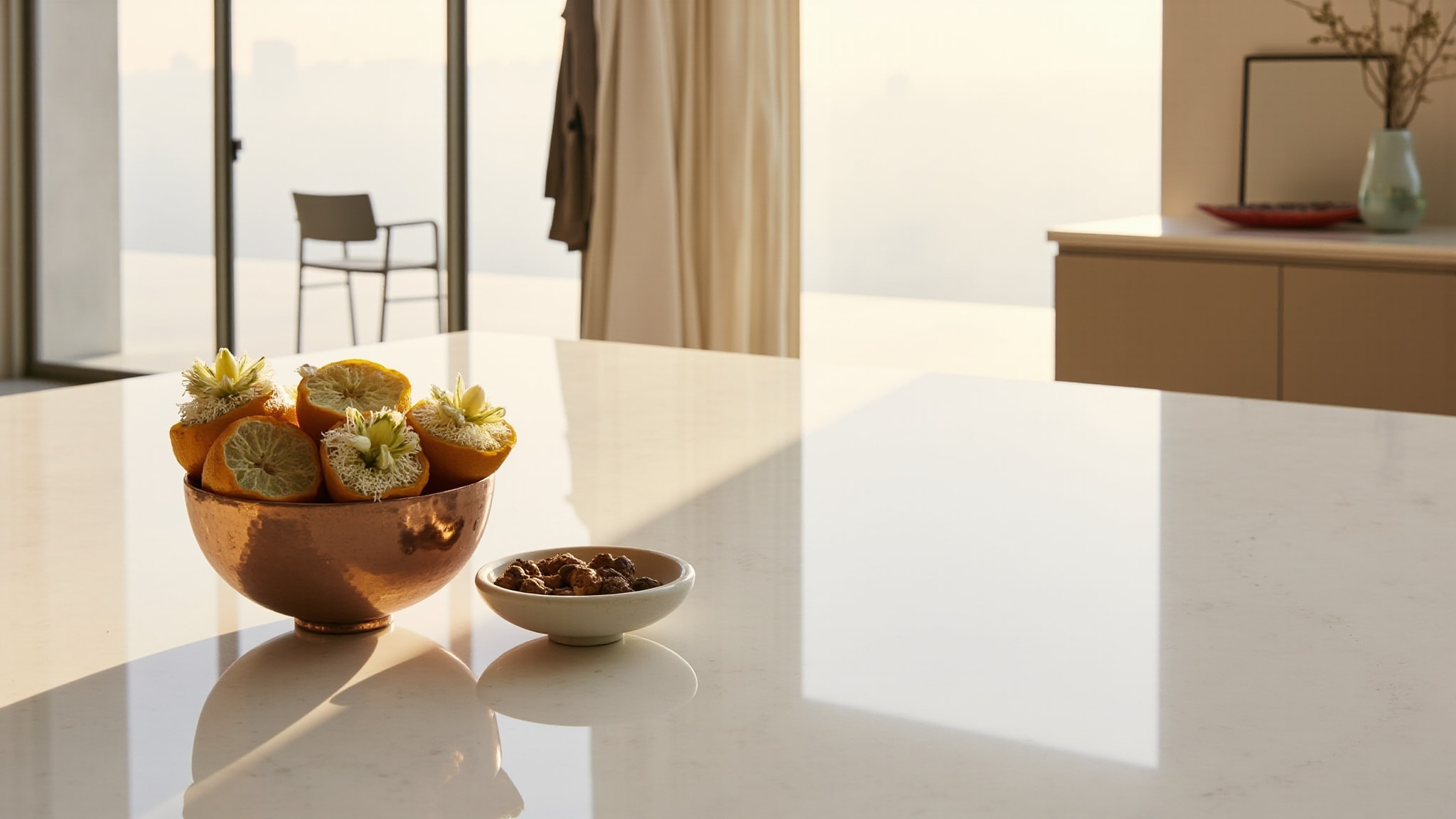
What's unusual here is the hazelnut. Bijaoui opens with hazelnut and cardamom, and from the very first spray the hazelnut does quiet work: it gives the neroli a soft, almost edible base, the kind of warmth that reads as skin rather than as sugar. The cardamom cuts through with a dry, green spiciness, sharper than you'd expect at the top of a neroli composition. The Moroccan neroli at the center is treated like a featured ingredient rather than a decoration, and the copper at the base keeps things from tipping fully into gourmand territory.
The evolution
The first minutes smell like opening a jar of roasted hazelnut while someone grinds cardamom right behind you. Sweet, but in a toasted-nut way rather than a candy way. The neroli arrives gradually, and it's the real thing, green, slightly bitter, with an almost vegetal sharpness at its edges. Magnolia creeps in alongside it, rounding the corners and giving the composition a soft, creamy lift. As the composition wears, it shifts toward warmth. The Moroccan orange brings a soft zest, the benzoin starts doing its slow resinous work, and cashmere wood wraps everything in something that reads like the inside of a well-worn coat. The copper stays present through the whole drydown, it's the thread that keeps this from becoming just another pretty floral. In the later hours you're left with musk and a faint metallic warmth close to skin. Comforting.
Cultural impact
Néroli Cuivré has drawn attention from neroli enthusiasts for the way it handles the note, treating it as the structural core of the composition rather than as a fleeting top note. The Moroccan orange blossom at the center is given room to develop, supported by hazelnut and cardamom above and resinous, woody, and metallic materials below. Wearers tend to describe the wearing experience as layered, with the floral brightness giving way slowly to warmth and skin-like softness in the later hours.