The Story
Why it exists.
The beginning
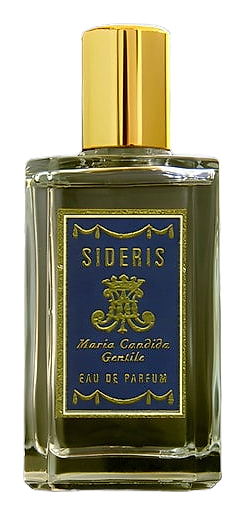
Sideris arrived in 2009 as Maria Candida Gentile's debut work, a declaration of intent before the house had even found its feet. The name comes from the Greek word for star, and the brief was exactly that: suspended between earth and stars, between smoke and sweetness, between something ancient and something that had never quite been said this way before. The official description speaks of "apparently distant olfactory accents," which is a polite way of saying the brief was impossible. Incense, saffron, mountain tea, beeswax, not ingredients that cooperate easily. They don't in most hands. Here they do.
The mountain tea is the unusual choice. Sideritis is a genus of Mediterranean herbs, woolly and silver-leaved, growing on rocky slopes in Greece and Turkey. It's used for tea, for medicine, as an aromatic plant. In perfumery it's rare, and pairing it with Turkish rose creates a tension, herbal against floral, green against warm. Neither wins. They negotiate. The beeswax in the base is equally specific: it's warm and honeyed, but beeswax also carries an animalic edge if pushed far enough, a fecal whisper that most brands sanitize away. Maria Candida Gentile did not sanitize it. The result is something that smells like an afternoon in a stone house, not a laboratory approximation of one.
The evolution
The opening hits resinous and warm, incense and myrrh, a smoky cloud that doesn't apologize for itself. The saffron is present too, a bitter-sweet thread that keeps the sweetness honest. For the first twenty minutes the black pepper crackles. Then it settles. The heart arrives quietly: rose and mountain tea, the tea cutting through the floral, both wrapped in the warmth of what came before. By hour two, the beeswax emerges. It's golden, slightly animalic, held by sandalwood. The drydown runs long, four to five hours of warm beeswax and resin before benzoin and sandalwood settle into something skin-close. The sillage never becomes huge. Moderate, intimate, the kind of fragrance that requires someone to lean in. On clothes the next morning: faint incense and something honeyed that refuses to fully disappear.
Cultural impact
Sideris occupies a specific corner of niche perfumery: it's neither a crowd-pleaser nor an avant-garde statement. For those who seek out incense-forward fragrances, it offers something harder to find, beeswax realism, mountain herbs, a Turkish rose that doesn't behave like every other rose. The composition speaks to a Mediterranean sensibility: warmth without sweetness, smoke without aggression, an herbal quality that rewards attention.