
The Story
Why it exists.
The beginning
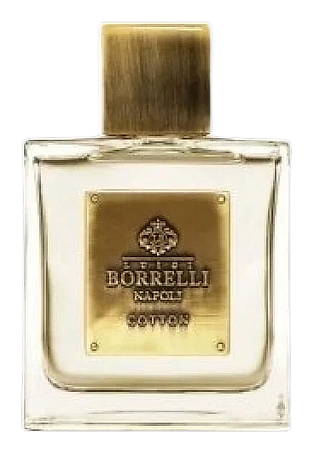
Luigi Borrelli built its identity around Neapolitan tailoring, where precision in cut and material is not a luxury but a requirement. Cotton arrived in 2016 as the third scent in a collection that began with Bleu Royal and Cashmere, and the intent was to translate that tailoring sensibility into fragrance. Rather than reaching for complexity, the house asked what a freshly laundered shirt actually smells like and worked backward from there. The perfumer approached the brief by treating each note as a fabric component: bergamot as the crisp starch, lavender as the soap residue, cedarwood as the wooden drawer the shirt rests in overnight.
The note choices in Cotton reflect a specific philosophy: clean does not mean empty. By using clary sage and oakmoss alongside the expected citrus and lavender, the perfumer ensured the fragrance had depth without sacrificing wearability. Iris in the heart serves a bridging purpose, connecting the freshness of the opening to the warmth of the base. This is not a fragrance that shouts; it is one that builds quietly and earns attention through consistency rather than initial impact.
The evolution
The fragrance opens with bergamot cutting through first, sharp and clean, followed within minutes by lavender settling like a cool breeze across warm skin. Rose arrives but does not linger at the front, instead dissolving as the heart emerges. Clary sage and iris arrive together around the fifteen-minute mark, the sage adding a herbal clarity and the iris contributing its signature powdery warmth. Oakmoss deepens the transition, giving the heart an earthy backbone that keeps it from feeling lightweight. By the second hour, amber and vanilla emerge as the dominant force, softening the herbal edges. Cedarwood and vetiver arrive last, adding dry woody structure that prevents the base from becoming too sweet. Musk provides the final impression, skin-close and understated, a quiet ending rather than a dramatic one.
Cultural impact
Cotton by Luigi Borrelli arrived in 2016 as part of a broader movement toward textile‑inspired scents that evoke everyday materials rather than exotic locales. Its clean, powdery‑green profile resonated with consumers seeking a subtle, wearable fragrance for daily routines. Over the past eight years the scent has been referenced in style blogs as a go‑to for minimalist wardrobes, and it has quietly influenced newer releases that prioritize comfort and approachability over bold statements. By aligning scent with the tactile experience of fresh cotton, the fragrance helped shift market expectations, encouraging other houses to explore fabric‑linked narratives and reinforcing the idea that perfume can be as familiar as a well‑pressed shirt.