The Story
Why it exists.
The beginning
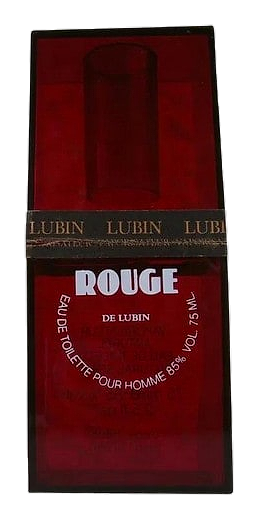
Rouge by Lubin carries the weight of a house whose earliest edition dates to 1808, one of the older names still standing in Western perfumery. The fragrance was released in 1981, and it reads as exactly that: a composition with vintage bones, a classical sense of proportion, and the kind of restraint that comes from a perfumer trusting their materials. Lubin built its reputation on structured, traditional compositions, and Rouge is no exception. It sits firmly in the woody-spicy register, a confident, grounded take on what a classically masculine scent can be when it leans into warmth rather than brightness. There is nothing tropical here, nothing borrowed from a Greek island or a sunlit shore.
The heart of Rouge is where its complexity announces itself. Patchouli and cedarwood form a deep, resinous core, while cinnamon and clove add a precise, almost aromatic heat that prickles at the edges. Jasmine threads through the middle, offering a soft, almost indolic sweetness that keeps the spices from feeling austere, and vetiver and spruce ground the composition with an earthy, sylvan weight. The interplay between the warm spices and the dry, woody backbone creates a tension that holds the composition upright. Nothing collapses into sweetness, and nothing tips into roughness.
The evolution
The opening hits with a burst of green brightness: petitgrain and bergamot lift the first impression, sharpened by the herbal, almost medicinal snap of oregano, basil, and aniseed. It is crisp and almost bracing, a cold-air feeling that pulls you closer to the wrist. Within the first ten to fifteen minutes, the green notes begin to settle, and the herbal-anisic quality starts to weave into the warmer materials beneath. The spices arrive next, with cinnamon and clove stepping forward and patchouli starting to build its dry, earthy presence. By the thirty-minute mark, the heart has fully unfolded: the jasmine offers a creamy, slightly animalic counterpoint to the dry woods, and vetiver and spruce settle the composition into something darker and more grounded. The spice holds through the second and third hours, never turning sweet, just deepening into a dry, warm continuum.
Cultural impact
Rouge sits in a specific corner of fragrance history: a discontinued 1981 woody-spicy composition from a house whose roots go back over two centuries. Its character aligns with a tradition of masculine perfumery that valued depth, warmth, and structure over projection or novelty. The combination of patchouli, cedarwood, cinnamon, clove, and jasmine, anchored by frankincense, ambergris, castoreum, leather, and moss, places it firmly in conversation with the spiced, resinous compositions that defined a particular era of perfumery. It is not a tropical scent, not an aquatic one, and not a powdery, cosmetic-leaning fragrance.