The Story
Why it exists.
The beginning
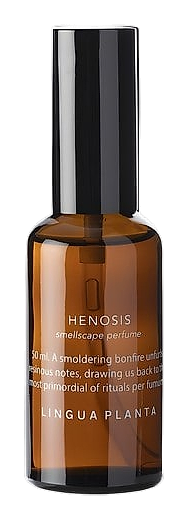
Henosis was created in 2020 by perfumer Merle Bergers as a response to ecological grief and the expanding reach of wildfires. The official description frames wildfire symbolism as a source of comfort and solace during a time of ecological change. That tension gives the fragrance its shape: birch tar and smoke evoke a smoldering forest, while camphor, vetiver, cedarwood, ambrette, and incense materials offer a more measured, calming counterweight. Henosis doesn't render fire as spectacle. It turns the image into ritual, presenting scent as a way to calm the mind and body.
Its most compelling detail is the controlled opposition at the center of the composition. Birch tar and smoke establish heat, char, and danger, but camphor brings a brisk medicinal coolness. Vetiver and cedarwood root that opening in soil and timber rather than letting it float away as pure smoke. Ambrette adds a warm, skinlike dimension, while frankincense, myrrh, and Siam benzoin deepen the drydown with resinous gravity. Henosis is therefore less about literal forest realism than the emotional contrast within fire: destruction and comfort, heat and relief, smoke and stillness.
The evolution
The opening centers on birch tar, smoke, and camphor, establishing the fragrance's elemental character. Birch tar brings dark char and a dry impression of scorched wood, while smoke spreads through it with a smoky depth. Camphor adds a clean, cold edge that keeps the composition from becoming solely dense or heat-heavy. Vetiver and cedarwood contribute earthy and woody qualities, giving the scent a firmer structure beneath the smoke. Ambrette adds a soft, warm texture, bringing a gentler dimension to the material. In the listed base notes, incense, frankincense, myrrh, and Siam benzoin bring resinous character, with benzoin adding a measured sweetness. The listed notes create a progression from dark birch and smoke toward mineral, woody, warm, and resinous qualities.
Cultural impact
Henosis offers a contemplative approach to fragrance through its ecological premise and the contrast between wildfire imagery and a calming sense of solace. Its composition combines smoke and birch tar with camphor, vetiver, cedarwood, ambrette, incense, frankincense, myrrh, and Siam benzoin. This gives the fragrance a distinctive position within natural perfumery, where plant-derived and elemental materials are arranged to create a reflective atmosphere. The result invites wearers who are drawn to ecological themes, contemplative compositions, and the tension between elemental imagery and composure.
The House
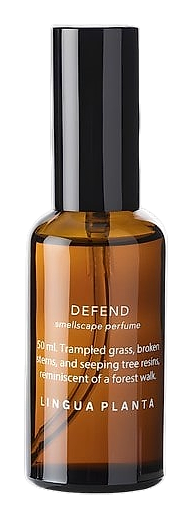
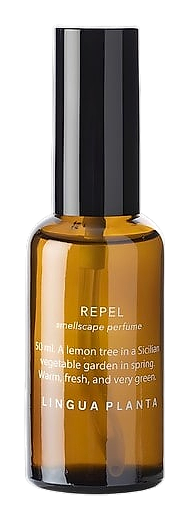
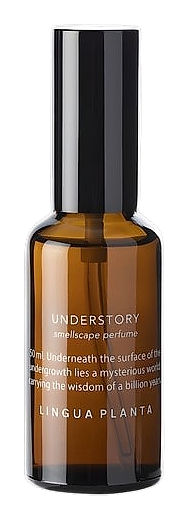
Lingua PlantaLingua Planta is a Dutch fragrance line founded by Merle Bergers, whose interest in plant communication shaped a study of scent as a language shared by living plants. What began as a research project after her studies at the Design Academy Eindhoven developed into a collection of natural perfumes. The house makes its fragrances by hand in small batches in the Netherlands, using essential oils and a plant-led approach to scent. Its 2020 releases include Attract, Defend, Henosis, Repel, and Understory, each presenting fragrance through concepts drawn from the ways plants relate to their surroundings.
The Creator
Merle BergersBergers works in natural raw materials and treats them with the patience of a studio artist. Her compositions tend to read as botanical portraits, built around green notes, earthy accords, and the more obscure territory of geosmin and petrichor, the smell of rain on dry ground.