Heritage
A house, in its own words
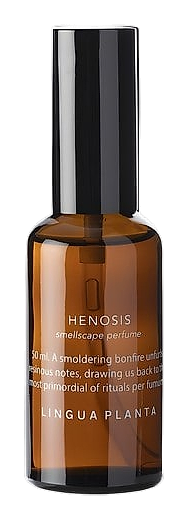
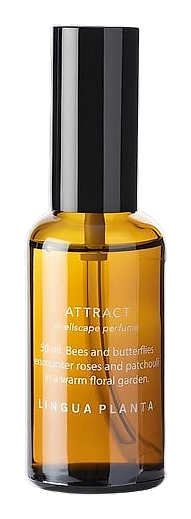
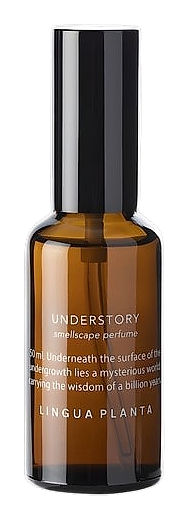
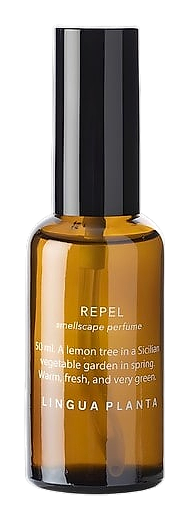
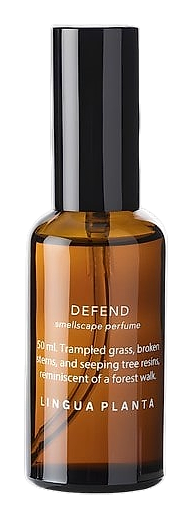
Lingua Planta grew from founder Merle Bergers’ exploration of the fragrant messages through which plants communicate. The project reportedly began during or after her graduation from the Design Academy Eindhoven, where she developed the idea into a broader body of work. Her research was influenced by writers Peter Wohlleben and Robin Wall Kimmerer, whose work examines plant life, ecological relationships, and the ways plants perceive their environments. This intellectual interest gave the brand its central idea: perfume can explore plant behavior rather than simply decorate a product with botanical ingredients. The project developed from research into perfumery and the study of tomato plants. In an early design piece, Bergers translated magnified details of a tomato plant into a tactile artwork that released familiar plant scents. That combination of close observation, material experimentation, and aromatic composition became an important foundation for Lingua Planta. The first Lingua Planta fragrances appeared in 2020. The launch collection consists of Attract, Defend, Henosis, Repel, and Understory. These titles frame scent as part of a larger conversation about plants, survival, relationships, and coexistence. Across the range, the brand maintains a consistent link between fragrance and the behavioral language of plants. Its history is therefore less about a conventional luxury lineage and more about a designer’s research project becoming a small-batch perfume house rooted in the Netherlands. Lingua Planta treats fragrance as a form of plant language. Its compositions are conceived around the roles scent plays in nature, including attraction, defense, separation, unity, and life beneath the visible surface. The title names, such as Attract, Defend, Henosis, Repel, and Understory, make this framework explicit. Rather than presenting perfume as a purely abstract decorative art, Lingua Planta asks how scent can communicate and what human beings might learn from those messages. The approach draws on the founder’s study of plants and on wider ecological thinking. Bergers’ research was influenced by Peter Wohlleben and Robin Wall Kimmerer, two writers known for examining plant behavior and our relationship with the natural world. This gives the brand a research-led character, even though its methods remain those of a small artisan perfume line. The house uses natural essential oils and presents plant-derived materials as carriers of aroma, memory, and atmosphere. Its philosophy also connects fragrance with design. Bergers’ earlier tomato-plant work showed an interest in translating botanical structures into physical experiences. Lingua Planta extends that interest by joining scent, plant observation, and hands-on making. The result is a collection built around ideas of connection and ecological awareness, with each perfume acting as an entry point into a particular plant-centered narrative.