The Story
Why it exists.
The beginning
Three perfumers. Five thousand attempts. Three years of patience. That's what went into La Vie Est Belle before it landed on shelves in 2012. Olivier Polge, Dominique Ropion, and Anne Flipo built it around one idea: the beauty of choosing your own happiness. Not beauty as performance. Beauty as freedom from the script everyone else wrote. The result was a gourmand iris, a composition where the powder of the flower and the sweetness of praline and tonka had to coexist without flattening each other. The iris carries a cool, almost chalky depth. The gourmand elements bring warmth, a caramelized edge that wraps around the floral rather than burying it. Patchouli threads through the base, giving the sweetness somewhere to land.
Iris anchors the whole composition, and the gourmand notes orbit it rather than the other way around. Pralaline brings a nutty, toasted sweetness, tonka bean layers in a warm, almond-like softness, and the two serve the iris instead of stealing focus. Patchouli grounds everything below, a dark, slightly damp earthiness that keeps the sweetness from floating off the skin. The florals in the heart, jasmine and orange blossom, flicker in and out, adding brightness without ever taking command.
The evolution
The first ten minutes are bright and almost chatty. Blackcurrant and pear do their thing up top, fruity and effervescent, the kind of opening that catches your attention in a perfume aisle. Then the iris arrives, and the whole composition exhales. Powdery, rooty, slightly buttery. Jasmine and orange blossom flicker through the heart but never dominate. By the two-hour mark, the sugar has quieted and the patchouli starts speaking. Warm, earthy, grounded. The praline and tonka bean come forward in the final hours, leaving a vanilla-soft, slightly nutty trace that clings to clothes the next morning. The longevity is consistently rated above average by wearers, and the scent outlives most outfits you pair it with. The way it transitions from sparkling fruit to creamy gourmand to soft, woody warmth gives it a layered feel that keeps unfolding the longer you wear it.
Cultural impact
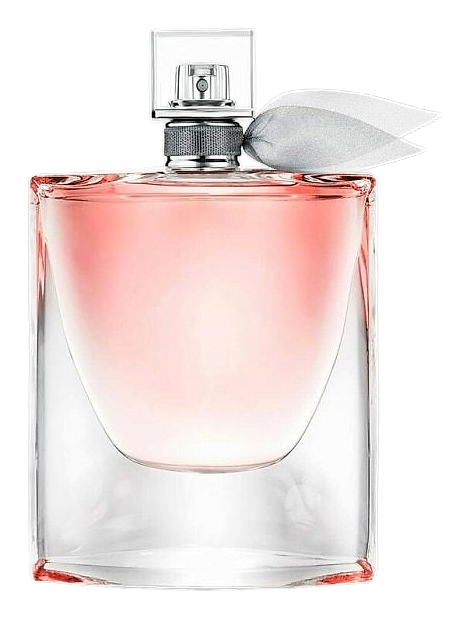
La Vie Est Belle became one of those fragrances that crossed over from perfumery into the wider cultural conversation. Women who don't think about perfume know this one. It occupies a recognizable position in the modern gourmand conversation: sweet enough to feel like a treat, structured enough to wear beyond date night. Julia Roberts fronted the campaign, photographed by Tarsem Singh, and the bottle, a redesigned version of the classic Lancôme bottle from 1949, became as recognizable as the juice inside. It leans more floral than many praline-forward orientals from the same era, more lifted, more daylight-ready.